Charter service at Portland International moves a whole group off the arrivals roadway in one lift instead of scattering it into cars. Convention delegations bound for the Oregon Convention Center, wine country tours, Mt Hood ski parties, Nike and Intel visitors and college squads all board here. Price a sprinter van, minibus or motorcoach instantly and get a vetted Portland operator.


Groups arrive at PDX in a handful of recognizable shapes. Convention delegations heading for the Oregon Convention Center and the downtown hotel blocks, leisure and incentive parties going straight out to the Dundee Hills and Newberg tasting rooms, ski groups pointed up US 26 toward Government Camp, supplier and customer teams visiting the Nike campus in Beaverton or Intel in Hillsboro, and university and athletic parties connecting south to Salem, Corvallis and Eugene. Nearly all of them want one vehicle, one manifest and one departure time rather than a dozen separate cars queued on I-205.
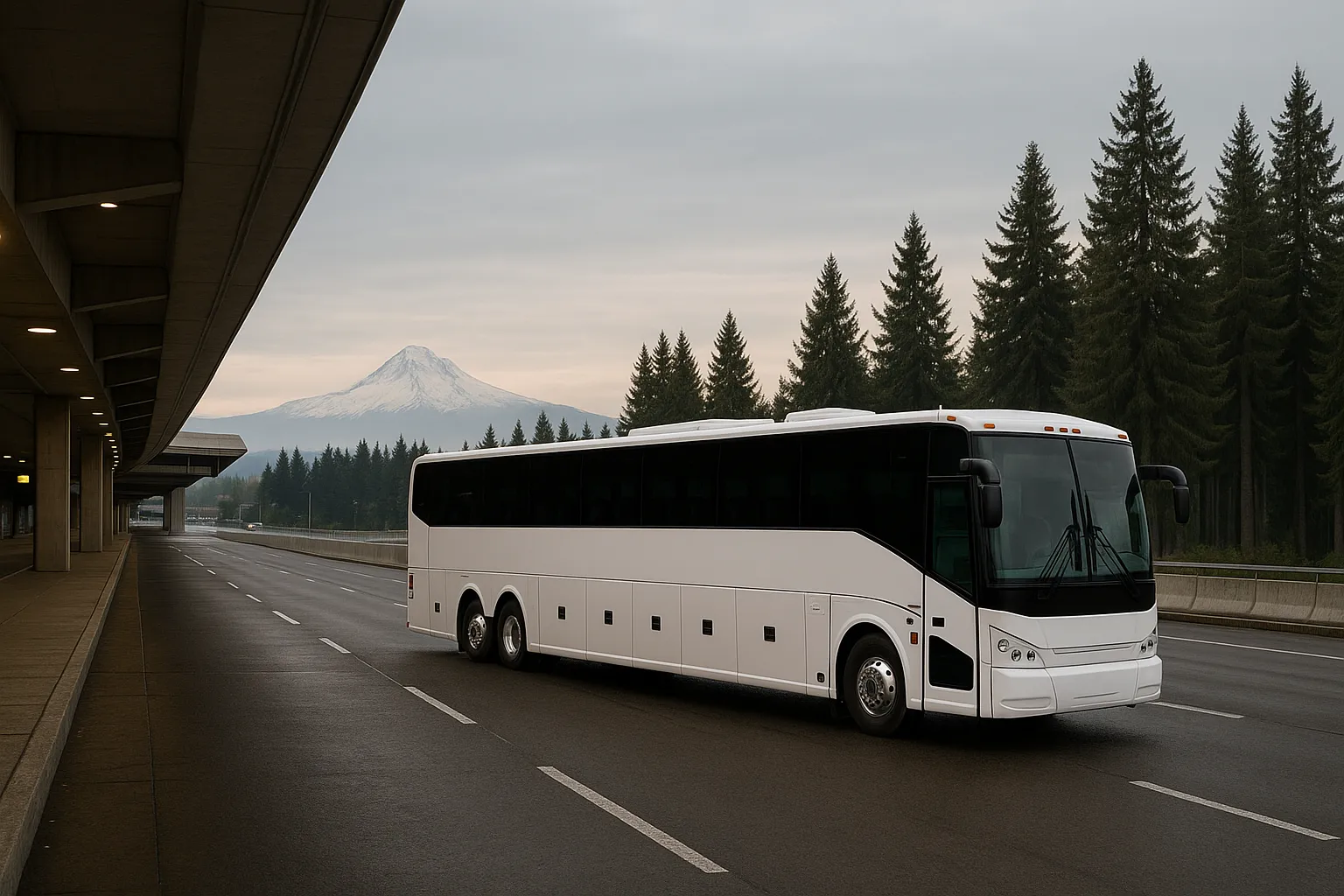
A coach pickup here is simpler than at most West Coast airports because everything happens at a single terminal. Arrivals and baggage claim sit on the lower roadway, and commercial vehicles including charter buses load at designated ground transportation positions there rather than in the general passenger lane. The Port of Portland controls that roadway, requires commercial providers to hold a roadway permit and charges per trip ground transportation fees that apply to charter buses. Island and door assignments shift with construction and with vehicle size, so confirm the current coach loading position with Port of Portland ground transportation before travel day.
The terminal is one building with concourses running off a central hall, and a rebuilt main terminal opened in 2024 with a new ticket lobby and a wider checkpoint area. Concourse letters and gate assignments have moved during that program, so ask your airline which concourse you will actually arrive in. Because there is a single baggage claim level, a group landing on several flights can gather at one door instead of being split across buildings. MAX Red Line light rail runs into the terminal, and road access is I-205 to Airport Way with I-84 and I-5 a few minutes on, so downtown Portland is a short run outside the afternoon peak.
Pricing is immediate. Enter the flight, the stops and the times, and the marketplace returns one all in number built from live availability, with driver, fuel, standard mileage and tolls included. The trip is matched to a vetted local operator holding ODOT intrastate passenger authority, the Class 1R permit Oregon issues for charter work. Flight numbers are tracked, so a late arrival moves the pickup rather than burning the booked hold time. Anything continuing north to Vancouver or Clark County crosses a state line, so those jobs go to an operator that also holds FMCSA interstate passenger authority. You sign the agreement electronically and watch the vehicle live on the day.
Terminals:
Charter vehicles load at designated commercial ground transportation positions on the lower arrivals roadway, and a large vehicle is not expected to sit there waiting. Operators stage nearby and time the approach to the moment the group is assembled. Confirm the current position with Port of Portland ground transportation.
Commercial ground transportation at PDX runs under a Port of Portland roadway providers permit, and the Port charges per trip ground transportation fees that include charter buses. A local operator already holds the permit, but confirm anything group specific with the Port directly.
The structure across from the terminal is built to passenger car clearance and is not a place for a motorcoach or a high-roof van. Driver waiting happens in a designated commercial hold area instead, so build the wait into the booked hours rather than assuming free parking.
With a single terminal and one baggage claim level, a group landing on different flights can consolidate at one numbered door instead of being chased around a ring. Agree that door with the operator in advance and give the group leader the number in writing.
| Vehicle | Hourly | Daily | Min hours |
|---|---|---|---|
| Motorcoach (47–56 pax) est. | $165–$245 | $1,600–$2,400 | 5 hrs |
| Minibus (24–35 pax) est. | $130–$190 | $1,300–$1,850 | 5 hrs |
| Sprinter van (10–14 pax) est. | $115–$170 | $1,050–$1,550 | 4 hrs |
Typical published ranges. Excludes driver gratuity (10–20%), tolls, parking and airport or venue fees; fuel is included on local trips and peak dates can run 10–20% higher. Your instant quote is one all-in price for your exact trip.
est. = estimated from regional pricing where few local sources publish rates.
Rates updated September 2026
A motorcoach absorbs a delegation landing across several afternoon flights and delivers it to one Oregon Convention Center hotel entrance. Show managers usually run staged departures through the day rather than one sweep at the end of the bank.
Groups fly in and head straight southwest to Newberg, Dundee and McMinnville. Tasting room driveways and gravel turnarounds favor a minibus or sprinter van over a 45-foot coach, and September and October book out early.
Winter parties run US 26 to Government Camp, Timberline and Mt Hood Skibowl, or OR 35 to Meadows. Skis, boards and boot bags eat bay space, and ODOT traction requirements can add time to the climb.
Customer and supplier teams land at PDX and work the Silicon Forest, with stops at the Nike campus in Beaverton, Intel Ronler Acres and Jones Farm in Hillsboro and offices in the Washington County corridor. Secured campuses assign the gate and the staging lot in advance.
Teams and academic groups transfer to Portland State, the University of Portland, Pacific University in Forest Grove and onward to Willamette in Salem. Equipment bays and one driver for the whole stay matter more than seat count.
Passengers flying in for a Columbia and Snake River sailing board at the Portland waterfront, and ocean calls at Astoria draw a two hour coach run each way. Debarkation morning pickups are built with real hold time.
🚏 Frequent destinations: Oregon Convention Center, Moda Center and the Rose Quarter, Providence Park, Portland Expo Center, The downtown Portland hotel district, Portland State University, Oregon Health and Science University on Marquam Hill, Nike World Headquarters in Beaverton, Intel Ronler Acres in Hillsboro and Willamette Valley wine country around Dundee and Newberg.
📅 Busiest periods: Portland Rose Festival from late May into June, Winter auto show and the spring trade show calendar at the Oregon Convention Center, Hood to Coast relay in late August, Waterfront Blues Festival around the Fourth of July, Willamette Valley wine harvest in September and October and Mt Hood ski season from November into April — book those weeks early.

Buses head out from Portland across a coast-to-coast network of vetted local operators — active in 14+ markets.
At a designated commercial ground transportation position on the lower roadway near baggage claim, not the general passenger curb a private car would use. The exact island and door depend on vehicle size and on what construction is active. Your operator confirms the meeting point before travel day, and Port of Portland ground transportation can confirm current commercial arrangements.
Plan past the first bag hitting the belt. A party of forty rarely reassembles in under half an hour once checked bags and restroom stops are counted, and international arrivals clearing federal inspection take longer. Most planners set the pickup with a buffer and let flight tracking move it if the aircraft is early or late.
Yes, within what you have booked and what the airport allows. The vehicle normally stages away from the terminal roadway and moves in once your group is together at a confirmed door, because long dwell by a large vehicle is not permitted on the lower roadway. Since the booking carries your flight number, a delay shifts the pickup instead of stranding the group.
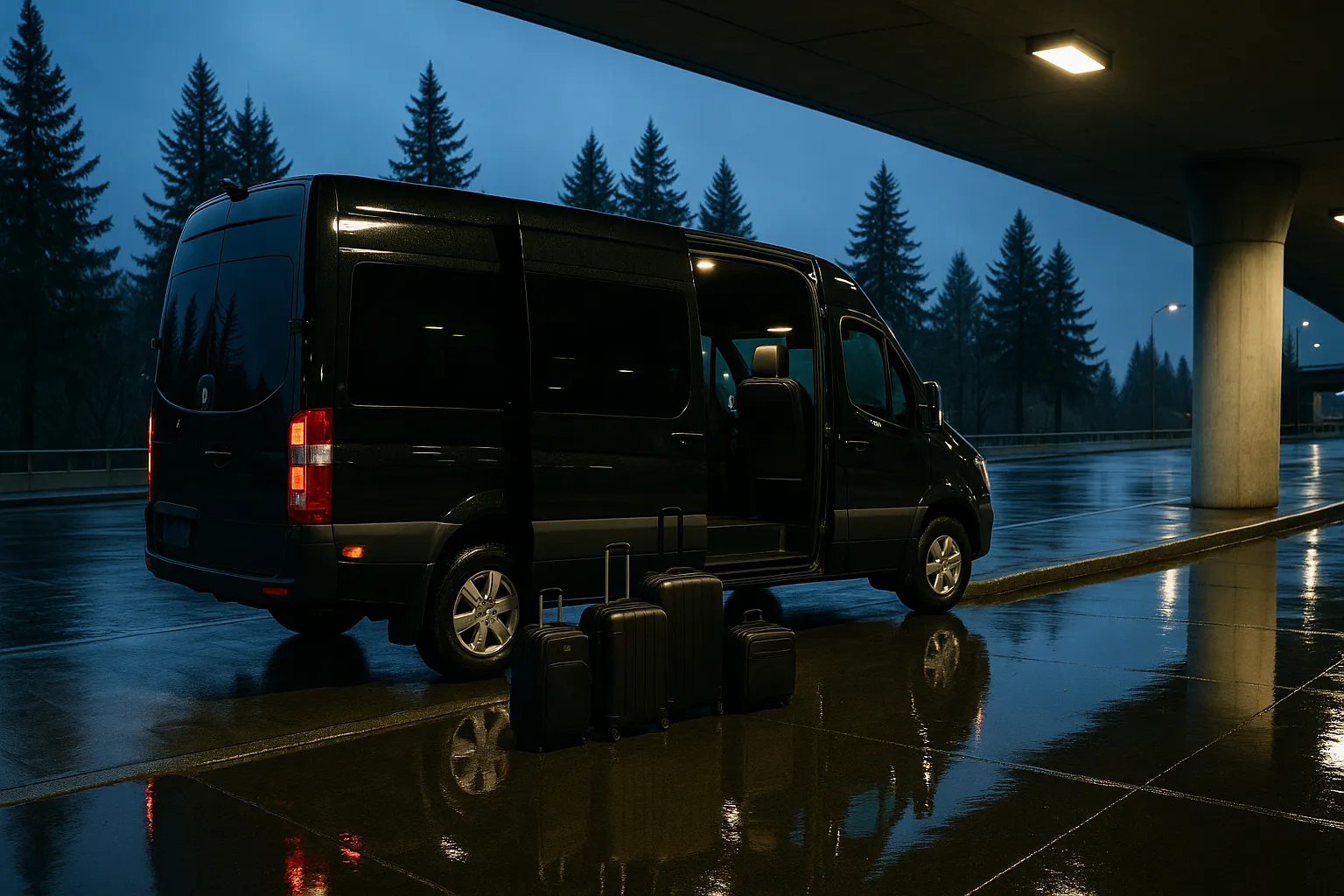
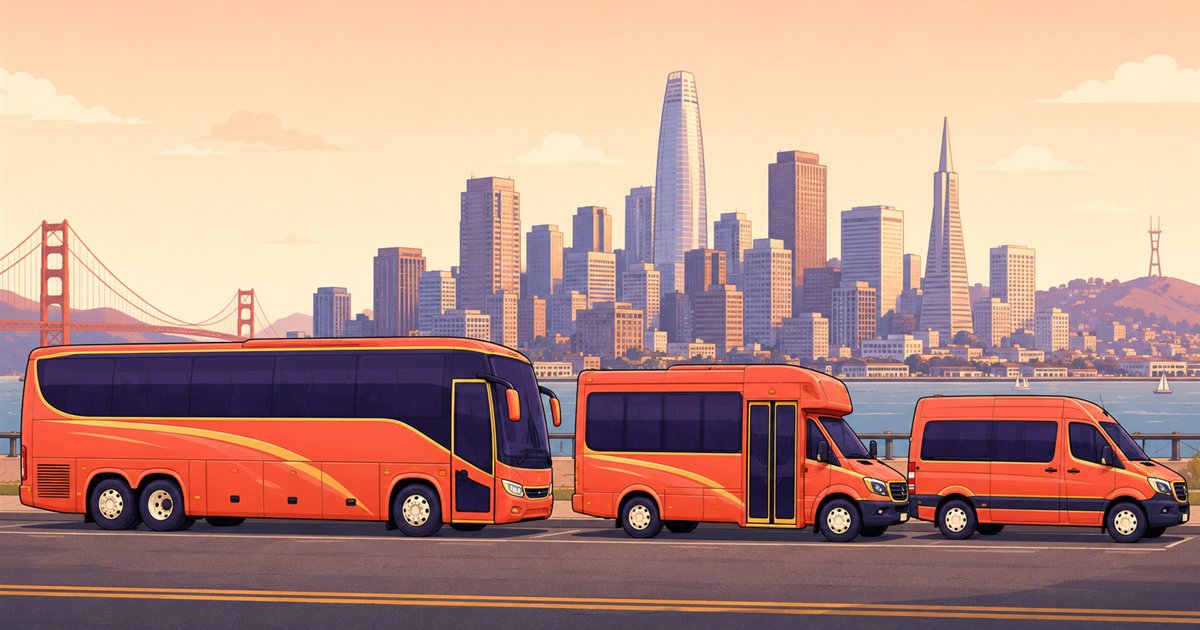
A sprinter van carries up to about 14 passengers, a minibus roughly 25 to 35, and a full-size motorcoach 49 to 56. Luggage decides as often as headcount at PDX. A winter group with skis and boot bags, or a tour party with full checked bags, may need the next size up or a second vehicle.
It does, legally. Crossing the Columbia is an interstate move even though it is a short drive, so the trip is matched to an operator holding FMCSA interstate passenger authority rather than Oregon intrastate authority alone. Practically, plan the routing too, because the I-5 Interstate Bridge lift spans open for river traffic and I-205 is often the steadier crossing.
Lift-equipped vehicles can be requested with the booking. Accessible equipment is a limited part of any market's supply, so ask early rather than on the day. Tell the operator how many wheelchairs are traveling, whether they are manual or powered, and whether riders transfer to a seat.
One clear price from a vetted local operator — pickup time follows your flight.