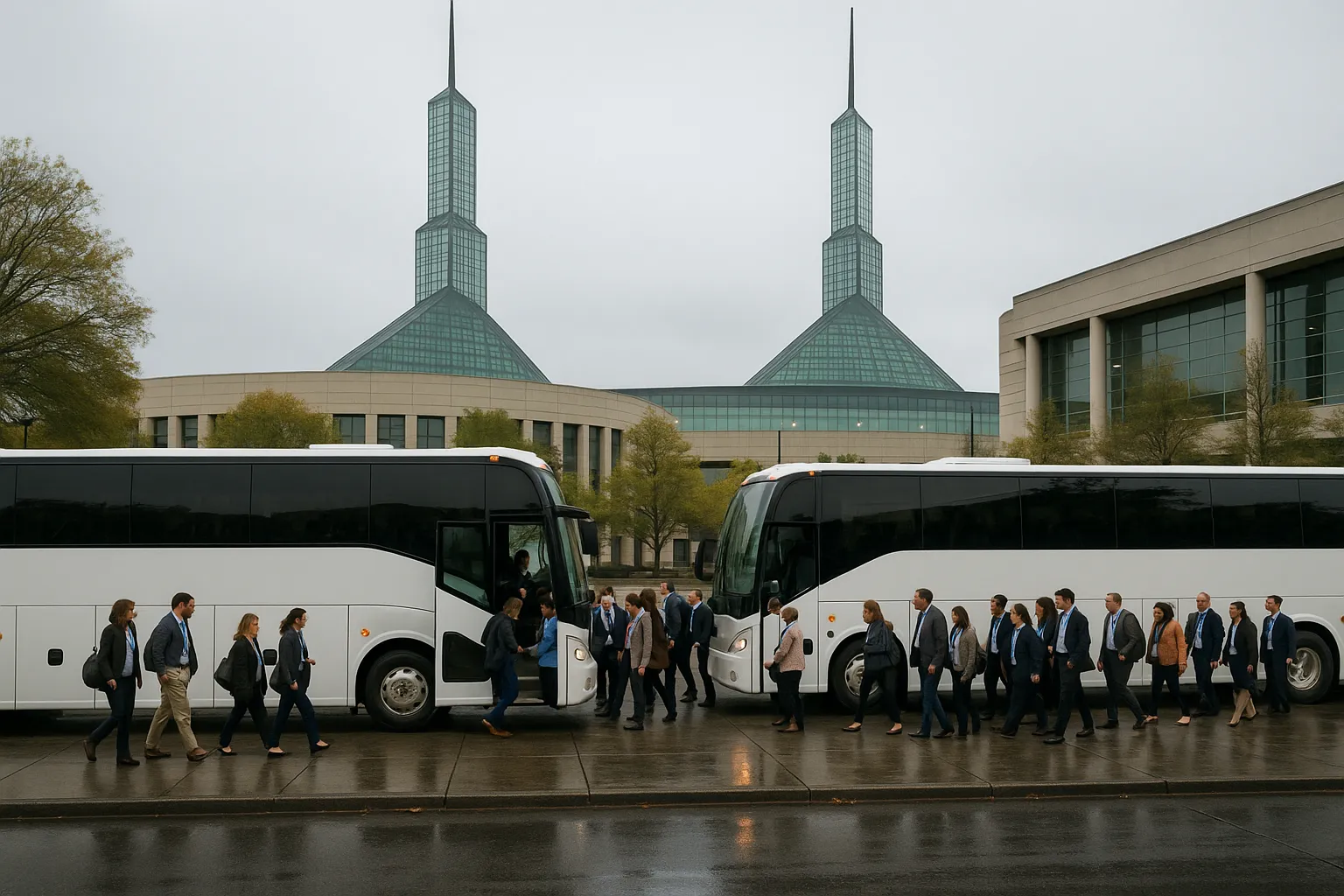
Conference shuttles in Portland are loop math: how many coaches at what headway keep attendees moving between hotel blocks and the Oregon Convention Center across the river. UCN turns your attendee counts and hotel map into a priced shuttle plan from vetted local operators, whether the event sits at the Convention Center, the Expo Center or a downtown hotel.
Get an instant quote →

A conference shuttle is a small transit system that exists for three days. Someone has to design the loop, set headways, place curb signage, and absorb the moment a keynote runs 20 minutes long and 800 people hit the sidewalk at once. Portland adds a specific wrinkle: the Convention Center sits in the Lloyd District on the east bank, while a lot of hotel inventory is downtown, so every loop crosses a bridge. The Steel and Burnside bridges behave differently at 8 a.m. than at 5 p.m., and operators who run this corridor weekly plan around that instead of discovering it.
Planners usually brief us with a hotel block list, a session schedule and expected peak loads, and get back a plan: how many 49 to 56 passenger coaches, what frequency, where each stop sits. Continuous loops typically run 15 to 30 minute headways with surge vehicles at morning open and evening close. Offsite events, a reception at a Pearl District venue or a closing dinner in the Gorge, get dedicated departure waves layered on top, all on one invoice. The Oregon Convention Center runs roughly 400 events a year, so operators here know its loading pattern on Holladay Street well.
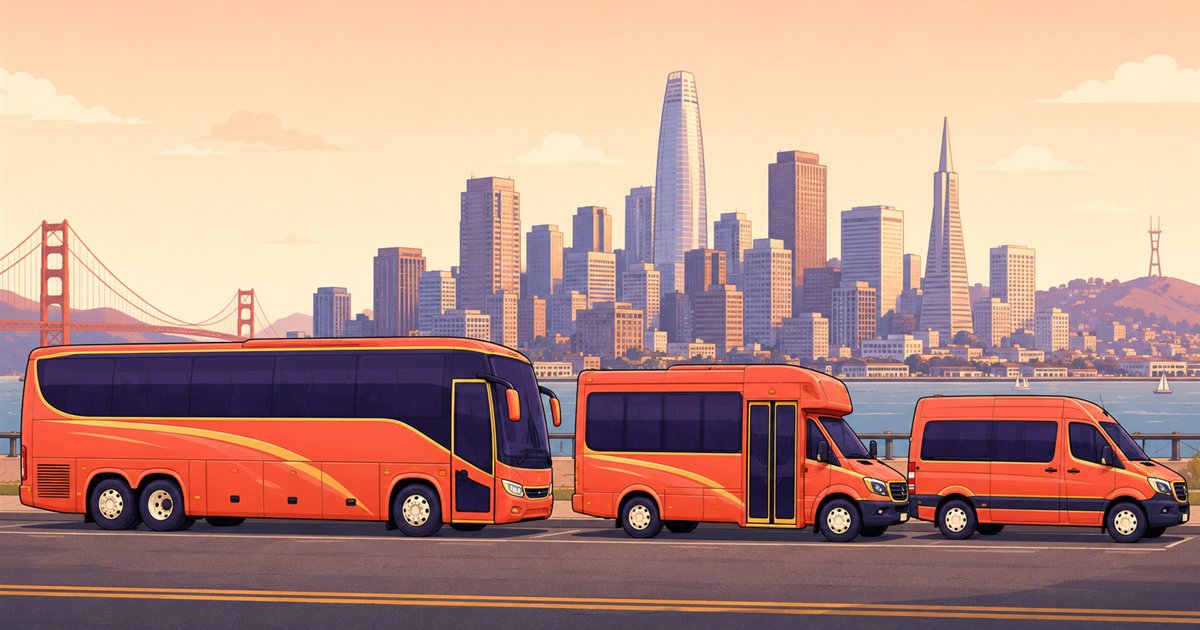
| Vehicle | Hourly | Daily | Min hours |
|---|---|---|---|
| Motorcoach (47–56 pax) est. | $165–$245 | $1,600–$2,400 | 5 hrs |
| Minibus (24–35 pax) est. | $130–$190 | $1,300–$1,850 | 5 hrs |
| Sprinter van (10–14 pax) est. | $115–$170 | $1,050–$1,550 | 4 hrs |
Typical published ranges. Excludes driver gratuity (10–20%), tolls, parking and airport or venue fees; fuel is included on local trips and peak dates can run 10–20% higher. Your instant quote is one all-in price for your exact trip.
est. = estimated from regional pricing where few local sources publish rates.
Rates updated September 2026
Coaches circulate between downtown and Pearl District hotel clusters and the Convention Center from 7 a.m. to 7 p.m. on 20-minute headways, crossing on the Steel or Burnside bridge depending on the hour. Extra vehicles surge for the morning badge rush, then the loop thins to a single coach midday.
Trade shows at the Portland Expo Center sit at the north end of the MAX Yellow Line with hotel inventory nowhere nearby, so shuttles do the real work. Programs that split sessions between the Expo Center and the Convention Center get a timed link run rather than a continuous loop, which is cheaper and easier to staff.
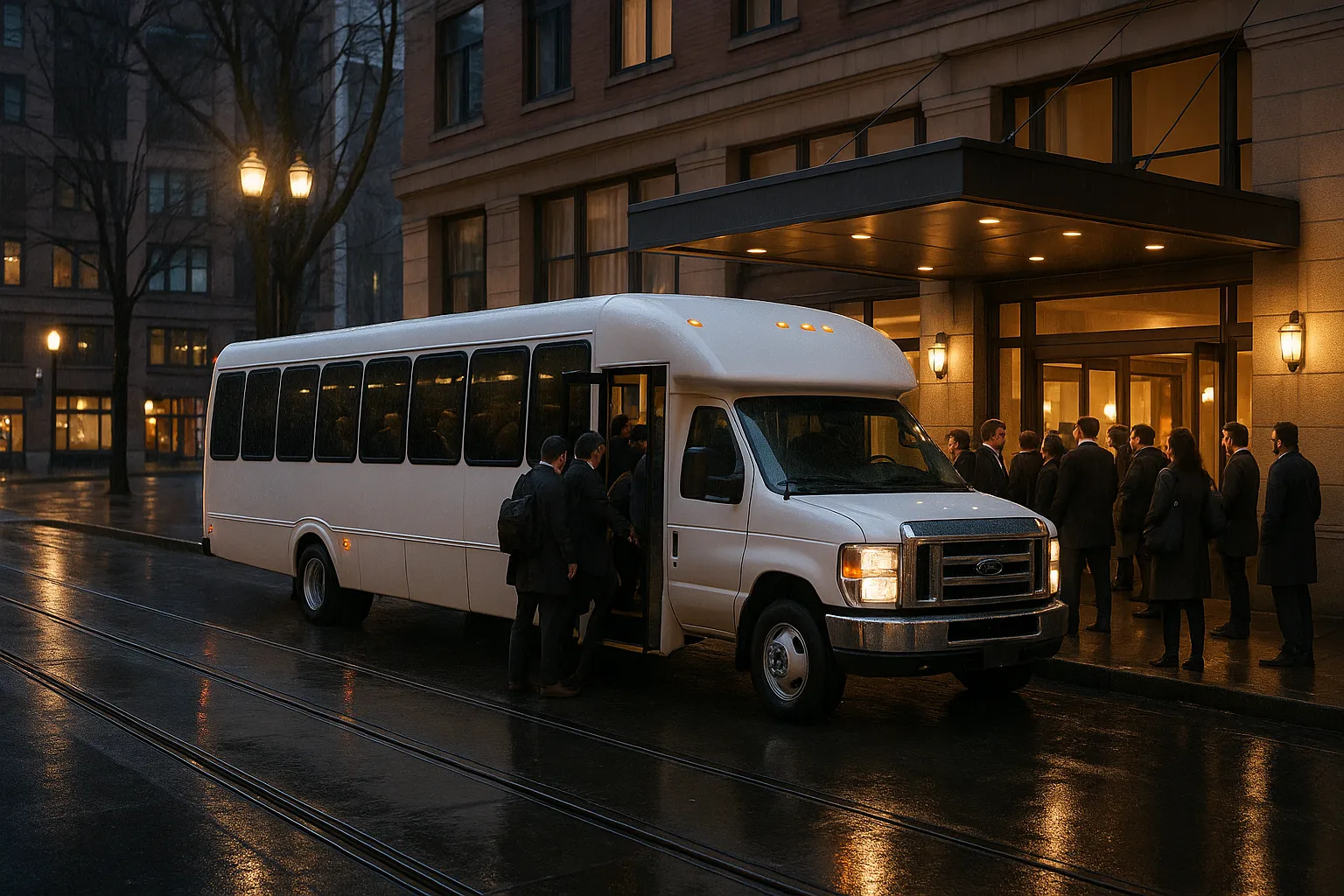
A closing night at a Willamette Valley winery, a Gorge lodge or a Pearl District event space needs waves, not a loop: three coaches lifting 150 guests inside 30 minutes, then staged returns from 9 p.m. onward. We size the wave against the RSVP count and the venue's own arrival rules.

A full-size coach on a full conference day typically runs $1,600 to $2,400, so a three-day program with three coaches lands in the low five figures. The biggest lever is loop design, since tight hotel clustering can remove a vehicle from the plan entirely, which is why we start from your hotel map rather than a vehicle count.
Fewer than most planners assume, because arrivals spread across the morning. One 56-passenger coach on a 20-minute loop moves roughly 150 to 170 people per hour per direction. A 1,000-person event spread over three hotel zones usually needs three to five coaches at peak and fewer midday.
At the designated bus loading areas along the Holladay Street side, coordinated with the venue's event services team, with the exact curb varying by event and hall. Experienced operators handle that coordination and put signage or staff at each stop, which shapes attendee experience more than the vehicles do.
Yes, and that is the point of using operators with on-site coordination. Dispatch watches loads and moves a coach from a quiet leg to a surging one inside the loop. Next-day changes, an earlier close or an added offsite, are usually absorbed with a same-day call rather than a new contract.
Ninety days is comfortable for a multi-coach program, and six months for citywide events or anything landing on a Rose Festival or Hood to Coast weekend, when the regional coach pool genuinely runs out. Single-vehicle airport transfers can be added later, but lock the core loop early.
One clear price from a vetted local operator — in seconds, no obligation.