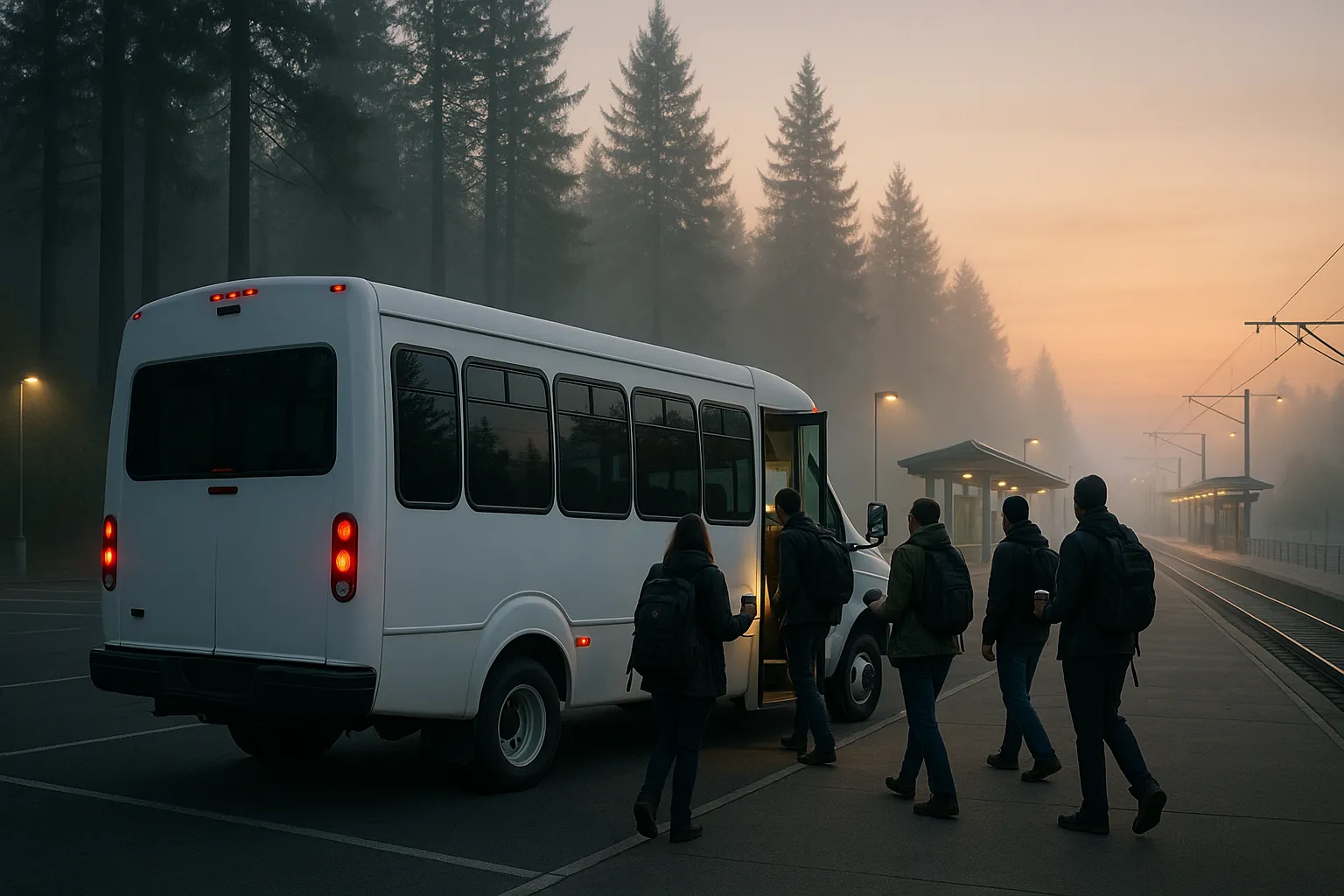
An employee shuttle in Portland is a hiring tool billed as a transportation line item: a fixed route that turns a US-26 or I-5 commute into desk time. UCN builds recurring shuttle programs with vetted local operators, from MAX station last-mile runs into Washington County campuses to cross-river commuter routes, priced per route per service day.
Get an instant quote →

The Portland commute is lopsided. Housing spreads east and north, while a large share of the jobs sit west of the tunnel in Beaverton and Hillsboro or on industrial land at Swan Island and Rivergate where transit thins out fast. Employee shuttles attack that directly with a guaranteed seat, a predictable arrival and 40 minutes of reclaimed time each way. We design routes from the zip-code clusters in your own HR data, then match each route to an operator who can commit the same vehicle and driver every day, because a shuttle that feels reliable earns ridership and one that feels improvised dies in a month.
Common Portland patterns: last-mile connectors from MAX Blue Line stations at Orenco, Quatama and Sunset Transit Center into campuses that sit a mile past the platform, shift shuttles at Hillsboro fabs and Columbia Corridor distribution sites timed to changeovers rather than clock hours, park-and-ride runs from Wilsonville and Gresham, and parking-relief loops between an overflow lot and the front door. Shuttle programs are also a standard answer for Portland-area employers working under Oregon's Employee Commute Options trip-reduction rule. Minibuses of 25 to 35 seats fit most single routes; a full coach makes sense when one corridor carries real volume.
| Vehicle | Hourly | Daily | Min hours |
|---|---|---|---|
| Motorcoach (47–56 pax) est. | $165–$245 | $1,600–$2,400 | 5 hrs |
| Minibus (24–35 pax) est. | $130–$190 | $1,300–$1,850 | 5 hrs |
| Sprinter van (10–14 pax) est. | $115–$170 | $1,050–$1,550 | 4 hrs |
Typical published ranges. Excludes driver gratuity (10–20%), tolls, parking and airport or venue fees; fuel is included on local trips and peak dates can run 10–20% higher. Your instant quote is one all-in price for your exact trip.
est. = estimated from regional pricing where few local sources publish rates.
Rates updated September 2026
A minibus meets Blue Line trains at Orenco or Sunset Transit Center and runs a 10-minute loop into a Hillsboro or Beaverton campus through both peaks. Employees skip the structure entirely, and the employer shrinks a parking lease instead of expanding one.
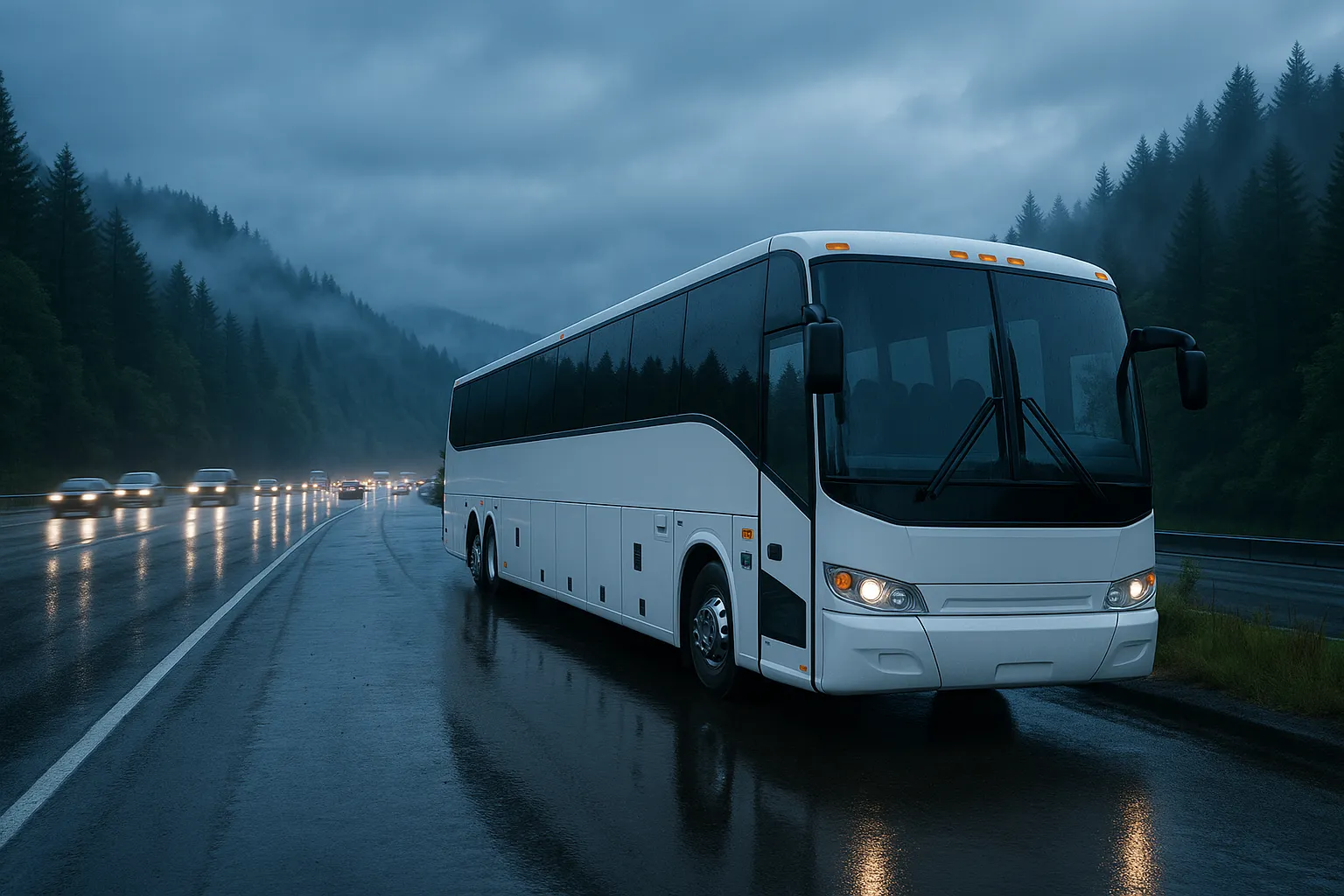
A coach leaves a Vancouver or Gresham park-and-ride at 6:40 a.m., beats the worst of the Interstate Bridge or the I-84 merge, and has people at their desks by 8. Wi-Fi and outlets turn the ride into the first hour of the workday. Reverse run at 5:15. Routes from Washington state are interstate and go to operators with FMCSA passenger authority.
Fab and warehouse shift shuttles synced to 6 a.m. and 6 p.m. changeovers, or contractor crew runs from a remote lot to a construction gate during a campus build. Operators commit consistent drivers who learn the gates, the badge checks and the people, which is most of what makes these programs work.

Think per route per service day. A single minibus route typically runs in the mid hundreds daily, and a full-size coach day sits in the $1,600 to $2,400 range before recurring-program pricing. Committed weekly volume prices meaningfully below one-off charter rates, and we quote the route, not the trip.
A 25 to 35 seat minibus starts making sense around 15 to 20 consistent daily riders on one corridor. Below that a vanpool is usually the honest answer and we will say so. Above 40 on a single corridor, a full-size coach lowers the cost per rider substantially.
Usually yes. Shuttle programs count toward the trip-reduction plans many Portland-area worksites maintain, and they are frequently cheaper than building or leasing additional parking in Washington County. Bring your current plan and we will size the route against the target rather than guessing.
That is the standard for recurring programs: a committed primary driver and vehicle with a named backup, from one local operator per route. Driver consistency is what makes a shuttle feel like a service rather than a rotating rental, and riders notice within a week.
A single-route pilot can be live in two to three weeks: one week to design the stop set from employee zip codes, one to contract the operator and communicate the schedule internally. Most employers pilot one corridor for a quarter before committing to a second.
One clear price from a vetted local operator — in seconds, no obligation.