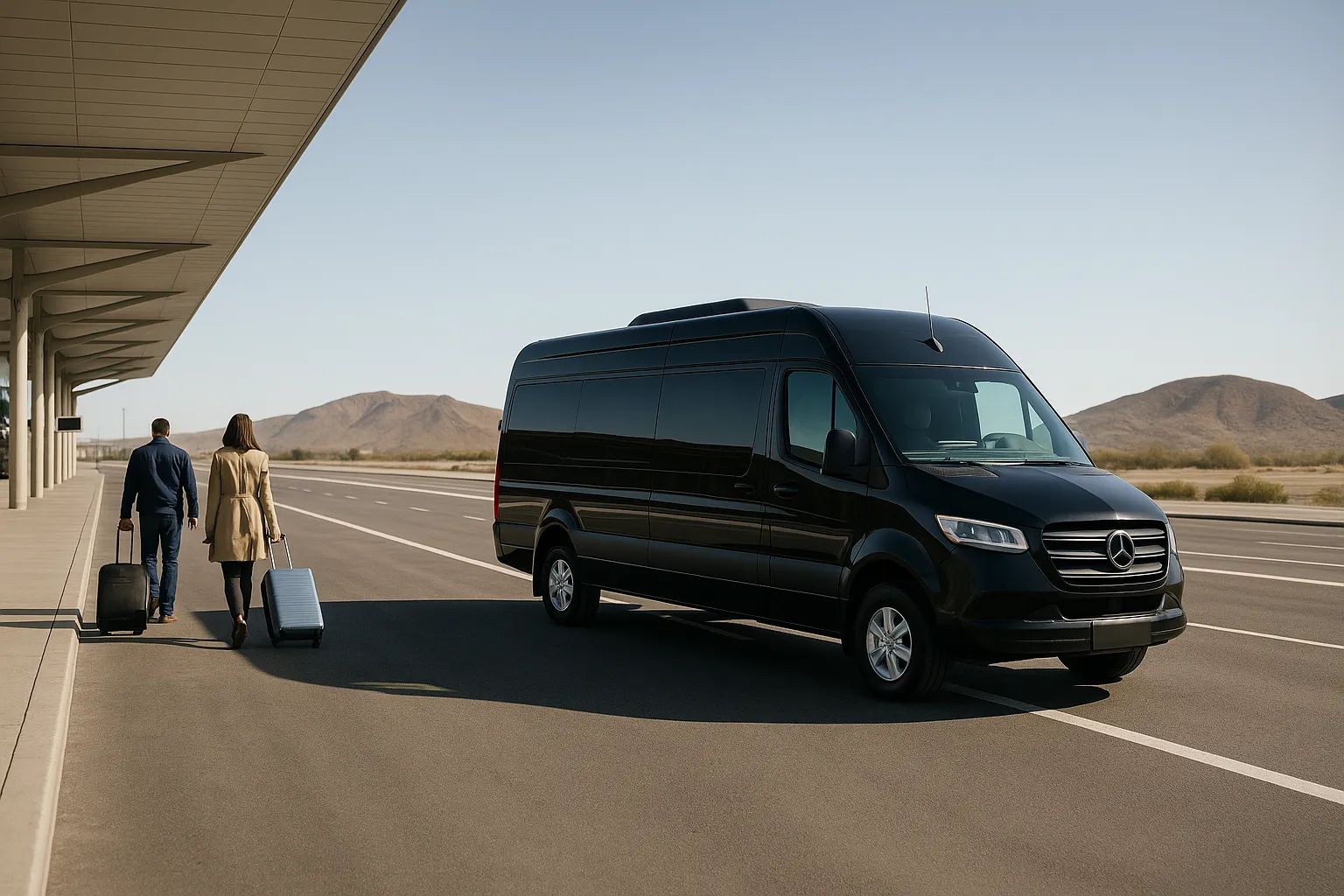
Ontario is the Inland Empire gateway, and for group travel that means easy coach access. Festival and desert-bound parties, university and conference groups, mountain ski trips and distribution-industry teams land here and board a bus without fighting a congested terminal horseshoe. Price a sprinter van, minibus or motorcoach instantly, all in, with a vetted operator working the Inland Empire.
Groups choose Ontario for geography. From here the desert resorts around Palm Springs and the Coachella Valley, the mountain communities at Big Bear and Lake Arrowhead, Temecula wine country and the Riverside and San Bernardino campuses are all closer than they would be from a coastal airport. Add the Ontario Convention Center, the Claremont Colleges, Cal Poly Pomona and UC Riverside, and the mix becomes conference delegations, student and athletic travel, festival charters and corporate teams visiting the enormous logistics and manufacturing footprint that surrounds the airport.
Coach handling is the quiet advantage here. The airport is not hemmed in by a single congested loop, the terminals have a straightforward arrivals level, and a motorcoach generally has more room to work than it does at the region's busiest fields. Large vehicles still use designated commercial ground transportation positions rather than the private car lane, and the group usually walks a short distance to a marked loading area. Access rules, staging locations and any commercial permit requirements are set by the airport and can change as facilities are upgraded, so confirm the current arrangement with airport ground transportation and have the operator send the meeting point in writing.
Passenger operations run through Terminal 2 and Terminal 4, two separate buildings connected landside, plus a facility handling international arrivals. The split matters for planning: a group arriving on carriers assigned to different terminals will not simply walk out of the same door, so nominating one terminal as the consolidation point avoids a coach shuttling between buildings. International parties clearing federal inspection need the usual buffer past first bag. Because the buildings are modest in size, domestic groups often reach the curb faster than a planner used to a large hub would expect.
Booking on the marketplace produces an all-in price for the itinerary you entered, on the spot, rather than a quote to be chased. The trip is assigned to a vetted charter-party carrier operating in the Inland Empire and greater Los Angeles market, which matters for long desert and mountain runs where local road knowledge is worth more than a low headline number. Flight tracking moves the pickup to the real arrival time. The agreement is signed electronically, changes are logged against the booking, and live tracking on the day lets a group leader follow the vehicle.
Terminals:
Coach access here is generally less constrained than at the region's busiest fields, but loading still happens at designated commercial positions rather than the private car lane. Confirm the current position with the operator.
Terminal 2 and Terminal 4 are separate buildings. Pick one as the consolidation point for a split arrival rather than having the vehicle move between them.
Terminal parking is car-height. A motorcoach or high-roof van waits at surface level or off-airport, so plan driver wait time accordingly on a long delay.
Commercial ground transportation access at ONT is set by the airport and has evolved with facility upgrades. A local operator will hold what is required; confirm anything group-specific with airport ground transportation.
| Vehicle | Hourly | Daily | Min hours |
|---|---|---|---|
| Motorcoach (47–56 pax) | $175–$260 | $1,700–$2,500 | 5 hrs |
| Minibus (24–35 pax) | $140–$205 | $1,350–$1,900 | 5 hrs |
| Sprinter van (10–14 pax) | $120–$180 | $1,000–$1,500 | 4 hrs |
Typical published ranges. Excludes driver gratuity (10–20%), tolls, parking and airport or venue fees; fuel is included on local trips and peak dates can run 10–20% higher. Your instant quote is one all-in price for your exact trip.
Rates updated September 2026
Spring festival weekends push large volumes of passengers from Ontario toward Indio, Palm Springs and La Quinta. Groups book coaches well ahead because the whole region moves on the same days.
Winter ski and summer camp groups run from ONT up the mountain highways. Local road experience and appropriate equipment matter far more on these runs than on a flat city transfer.
Because the convention center and its hotels sit minutes from the airport, delegations often use short shuttle loops rather than a single arrival sweep.
Visiting teams, admitted student events and academic conferences at UC Riverside, Cal Poly Pomona and the Claremont Colleges route through Ontario on minibuses and coaches.
Teams touring distribution and manufacturing facilities across the Inland Empire keep an executive sprinter van for the day, hitting multiple sites without a rental car fleet.
Incentive and celebration groups run south from the airport to Temecula for the day or the weekend, typically with one vehicle on hourly standby for winery hopping.
🚏 Frequent destinations: Ontario Convention Center and the surrounding hotel cluster, Palm Springs and the Coachella Valley resorts, Big Bear Lake and Lake Arrowhead, Temecula wine country, UC Riverside and downtown Riverside, Cal Poly Pomona, The Claremont Colleges, Anaheim resort district, Downtown Los Angeles and the convention hotel block and Rancho Cucamonga and the Inland Empire logistics corridor.
📅 Busiest periods: Spring desert music festival weekends in the Coachella Valley, The March tennis tournament week in the Indian Wells area, Winter ski season in the San Bernardino Mountains, Ontario Convention Center trade show and expo calendar, University move-in and commencement across the Inland Empire and Peak holiday logistics and corporate travel in November and December — book those weeks early.
Buses head out from Los Angeles across a coast-to-coast network of vetted local operators — active in 11+ markets.
Distance to the destination. For the desert, the mountains, Temecula or anywhere in the Inland Empire, the drive from ONT is substantially shorter, and the terminal is far quicker to clear with a group. The trade-off is a smaller flight schedule, so check that your itinerary is actually available.
Terminal 2 and Terminal 4 are separate buildings, so pick one as the meeting point and have the other arrivals walk over. Sending a motorcoach between two terminal frontages costs more time than the walk, and it risks the vehicle being out of position when the main body of the group appears.
Coaches do run mountain itineraries, but the route, the season and the vehicle all matter, and winter conditions can change the plan. Discuss the destination with the operator when you book rather than on the morning of travel, and be open to a minibus if conditions or venue access favor one.
Sprinter vans seat up to about 14, minibuses roughly 25 to 35, and motorcoaches 49 to 56. Lift-equipped vehicles can be requested. For long desert or mountain runs with full luggage, size up rather than filling every seat, since bag volume rather than headcount usually decides.
As early as you can. Spring festival weekends draw on the same regional vehicle supply at the same hours, and availability tightens months out rather than weeks out. Locking the itinerary early also protects the return leg, which is usually the harder half to cover.
Yes. The booking carries your flight number and the pickup follows the actual arrival rather than the published schedule. The vehicle waits away from the terminal frontage and comes in once your group is assembled at the agreed meeting point.
One clear price from a vetted local operator — pickup time follows your flight.