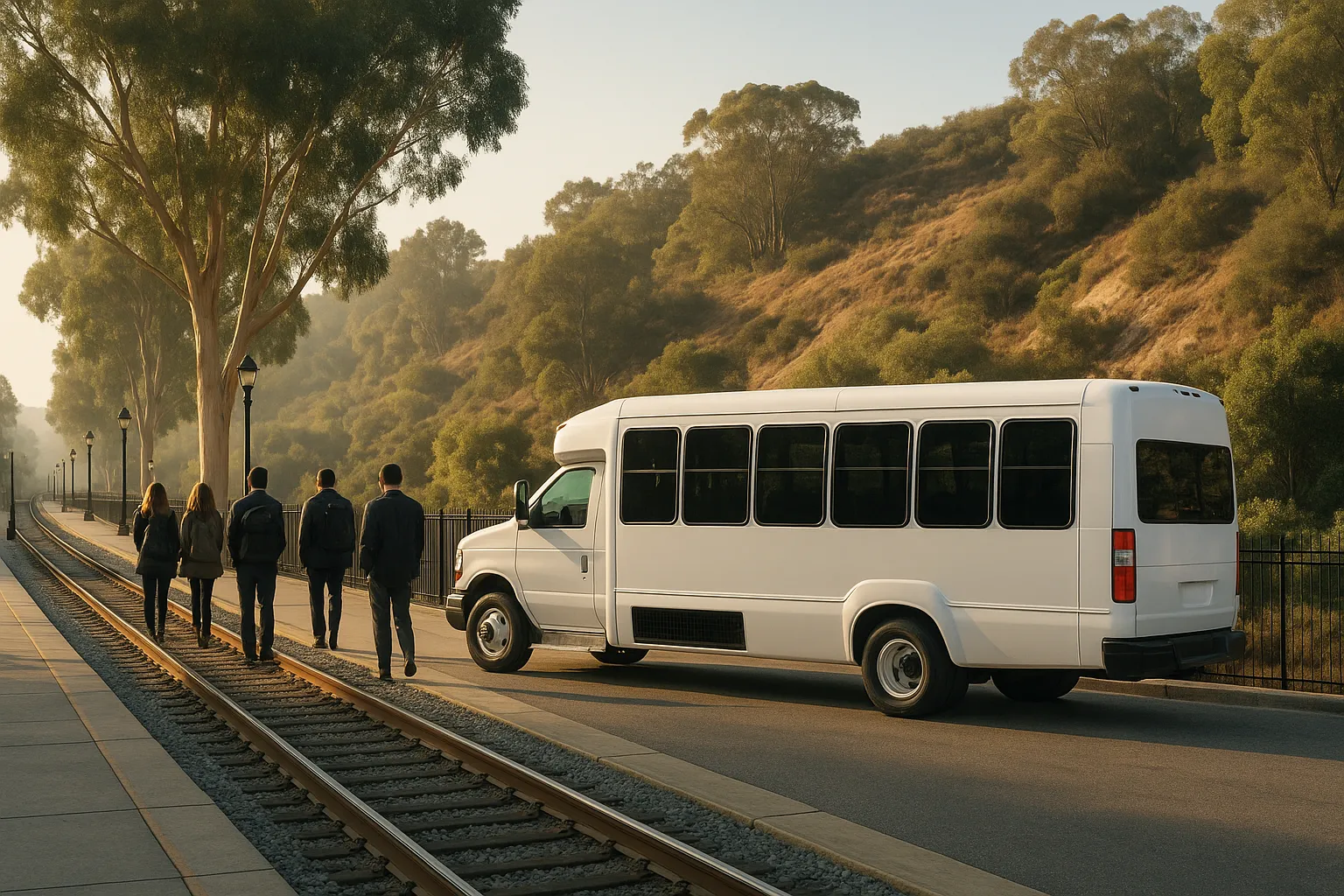
An employee shuttle in San Diego usually solves one of two chokepoints: the I-5 and I-805 merge north of La Jolla, or the last mile from the Sorrento Valley Coaster platform to a campus nobody can walk to. Umbrella Charter Network builds recurring shuttle programs with vetted local operators under one contract and one monthly price.
Get an instant quote →

San Diego commute geography is unusually shuttle-friendly because the jobs cluster and the transit stops land just short of them. The Coaster and the Blue Line drop riders within a mile or two of Sorrento Valley, Torrey Pines and University City offices, close enough that a short loop works and far enough that walking does not. A workable program starts with the timetable, not the bus: two or three arriving trains in the morning peak set the departure times, and the loop has to clear the platform before the next one lands. Get that wrong and ridership never recovers.
The South Bay version looks different. Otay Mesa manufacturing and logistics runs early shifts, and a large share of that workforce crosses at San Ysidro on foot, so the shuttle picks up at the transit center at hours when nothing else is moving. Those programs live or die on reliability at 5 am. In both cases vehicles are sized to the count, typically minibuses for loops under 35 riders and full-size coaches for line-haul runs, and the program is priced per vehicle day under one agreement rather than as a stack of individual charters.
| Vehicle | Hourly | Daily | Min hours |
|---|---|---|---|
| Motorcoach (47–56 pax) est. | $170–$250 | $1,650–$2,400 | 5 hrs |
| Minibus (24–35 pax) est. | $135–$200 | $1,300–$1,850 | 5 hrs |
| Sprinter van (10–14 pax) est. | $115–$175 | $1,000–$1,450 | 4 hrs |
Typical published ranges. Excludes driver gratuity (10–20%), tolls, parking and airport or venue fees; fuel is included on local trips and peak dates can run 10–20% higher. Your instant quote is one all-in price for your exact trip.
est. = estimated from regional pricing where few local sources publish rates.
Rates updated September 2026
Meet arriving trains at the Sorrento Valley Coaster station or the UTC Blue Line stop and run a fixed loop through the campus cluster, timed so the vehicle is back on the platform before the next train.
A midday loop linking Sorrento Valley, Torrey Pines and University City buildings so staff can move between sites without driving and re-parking. Usually a minibus, because the campus drives are tight.
Early and late runs from the San Ysidro Transit Center or the Iris Avenue Trolley to Otay Mesa plants, sized to shift change and held to a hard on-time standard because the next option is a two hour bus ride.

Most programs run on a term agreement with a fixed monthly price per vehicle day, which is how the operator can dedicate a vehicle and a named driver to your route. Short pilots are common before a longer term, and we will price a pilot and a full year side by side.
You bring the home zip code spread or the transit timetable you are feeding from, and the plan comes back with stops, run times and vehicle count. Sorrento Valley programs are built backwards from Coaster arrival times; office-to-office circulators are built from a target headway.
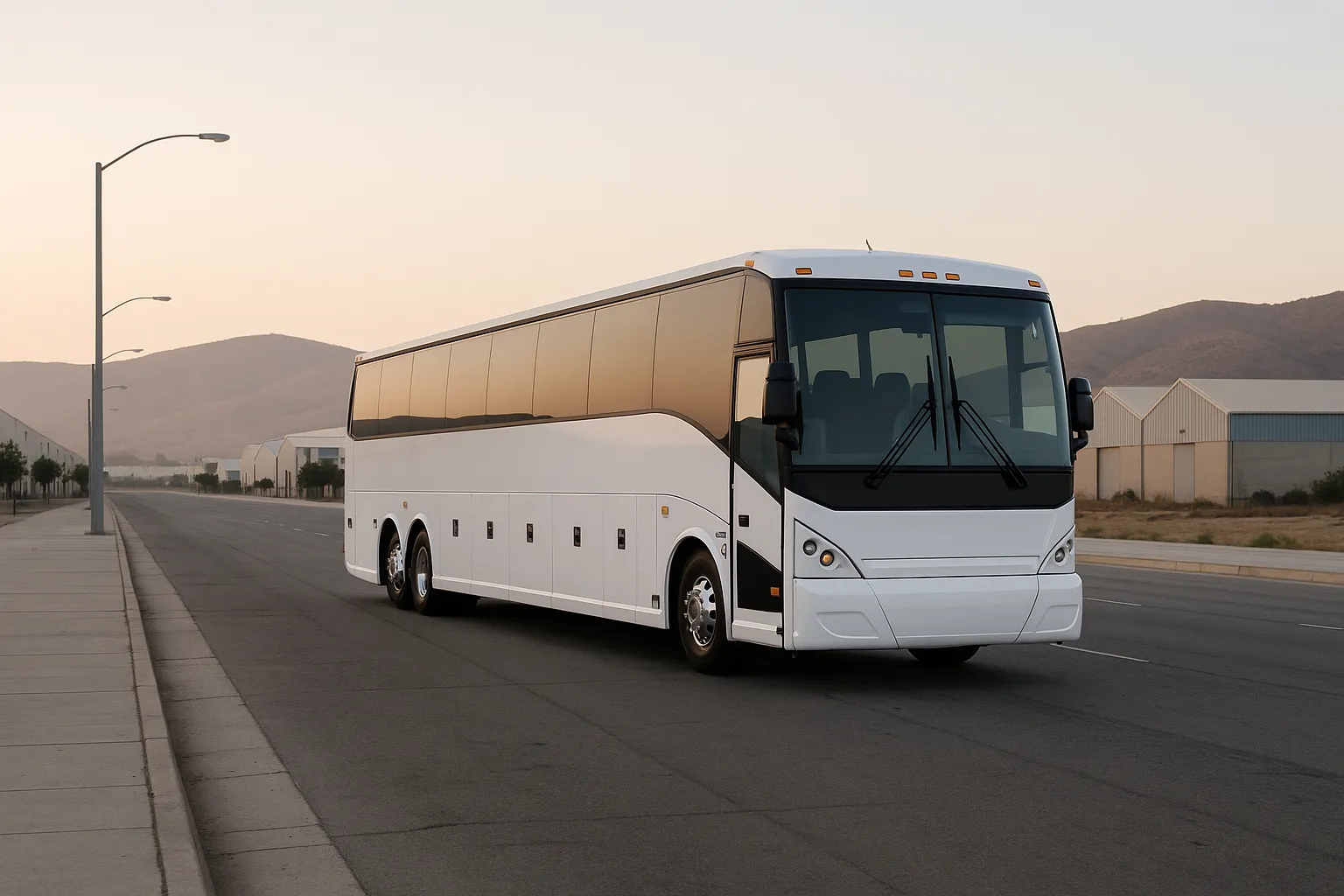
Under about 35 riders a minibus is easier to route and cheaper to run. Above that a full-size motorcoach costs less per seat and, on a longer line-haul from North County or the South Bay, the reclining seats and the onboard restroom matter on a 50 minute ride.
Yes. Every trip carries a live tracking link, which for a commute route matters more than for a charter because riders decide each morning whether to trust it. Ridership counts per run are available so you can resize the route after the first month.
It can. Many employers run a weekday commute contract and then add one-off charters for all-hands events, holiday parties or an airport wave, booked through the same account at the same all-in pricing.
One clear price from a vetted local operator — in seconds, no obligation.