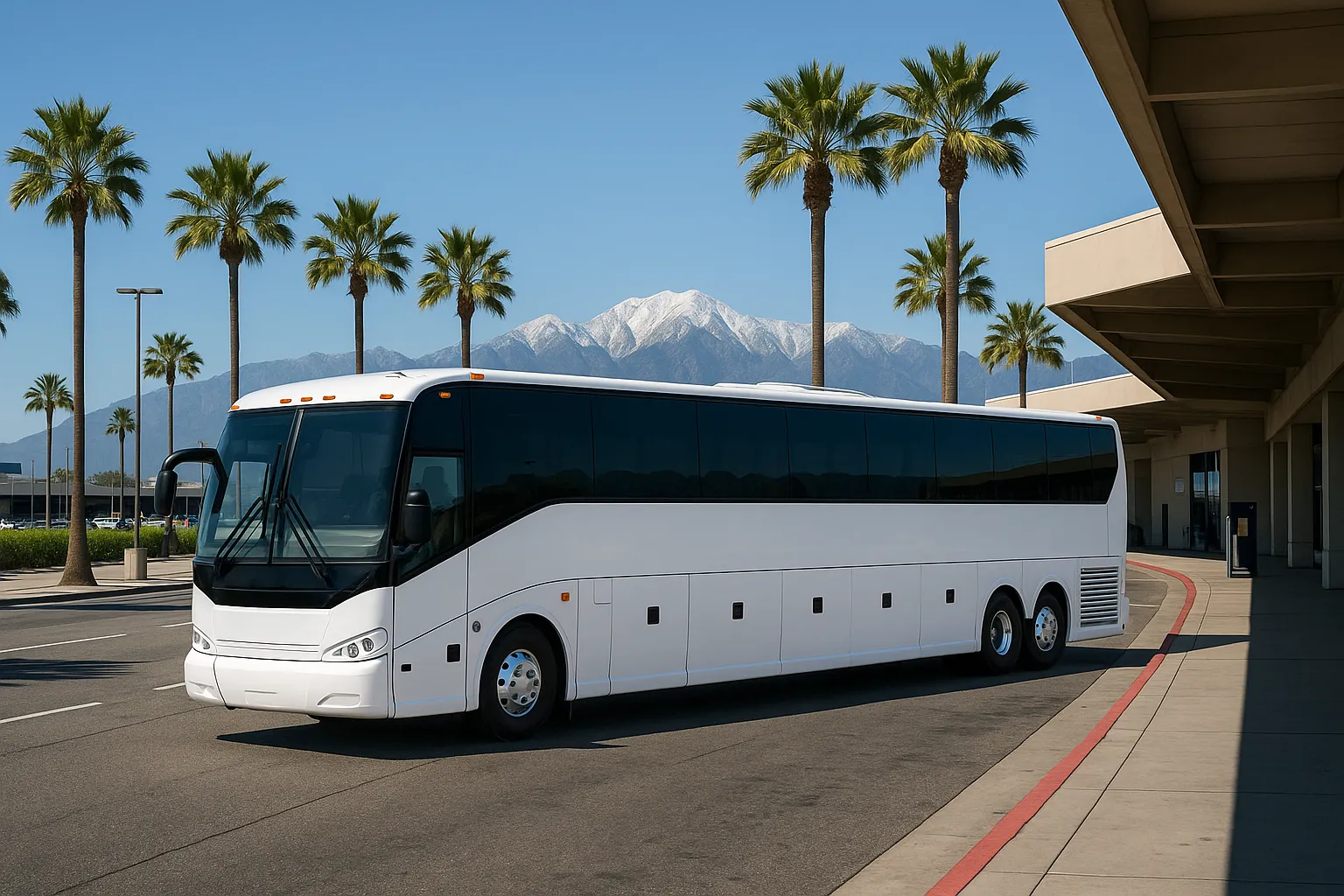
Ontario is the Inland Empire's arrival point, so charter work here usually starts at Ontario International Airport and fans out from there. Groups transfer to Toyota Arena events, the Ontario Convention Center, Ontario Mills and the logistics campuses along the 10 and the 15, and plenty keep rolling west into Los Angeles or east toward Palm Springs.


Ontario earns its group traffic three ways. The airport brings people in, and a growing share of Inland Empire and eastern Los Angeles County visitors now land there rather than at the coastal airports. Downtown, the Ontario Convention Center runs a steady calendar of trade and consumer shows that need delegate shuttles, and Toyota Arena across the way carries concerts, hockey and a heavy spring run of regional graduation ceremonies. The third stream is work: the distribution and manufacturing campuses spread through Ontario Ranch and the corridors along Interstate 10 and Interstate 15 move shift crews, contractor teams and visiting auditors all year.
The freeways here are truck freeways, which changes how a schedule is built. Interstate 10 and Interstate 15 both carry heavy goods movement through the middle of the day rather than only at commute peaks, State Route 60 runs parallel to the south and the 210 picks up the northern moves. Milliken Avenue, Haven Avenue, Archibald Avenue, Vineyard Avenue and Holt Boulevard handle the local legs, and the arena, convention center and airport sit close enough together that a shuttle loop between them is short. Anything heading to Las Vegas climbs the Cajon Pass on the 15, where weekend direction matters more than the hour.
Ontario International Airport is the point of the city for group travel. It is compact, the terminals are close together and a coach can clear an arrival without the long crawl the coastal airports demand, though commercial ground transportation uses assigned areas and permitting rules that the airport sets, so confirm the current charter pickup point before the date. Los Angeles International is a long run west, often well over an hour each way, and Palm Springs is the eastern alternative. Metrolink serves the San Bernardino line locally for rail groups.
Booking is instant, which suits a market where a plant manager or a show organizer needs a number the same day. Enter the pickup, the stops and the times and the all in price appears with driver, fuel, standard mileage and tolls inside it and no separate gratuity line. The trip is matched to a vetted local operator based near the pickup, so the vehicle starts in the Inland Empire rather than deadheading in from the coast. The agreement is e signed, a 25 percent deposit holds the vehicle and date, and each assigned vehicle carries a live tracking link on the day.
Pickups across Ontario and San Bernardino County:
| Vehicle | Hourly | Daily | Min hours |
|---|---|---|---|
| Motorcoach (47–56 pax) | $175–$260 | $1,700–$2,500 | 5 hrs |
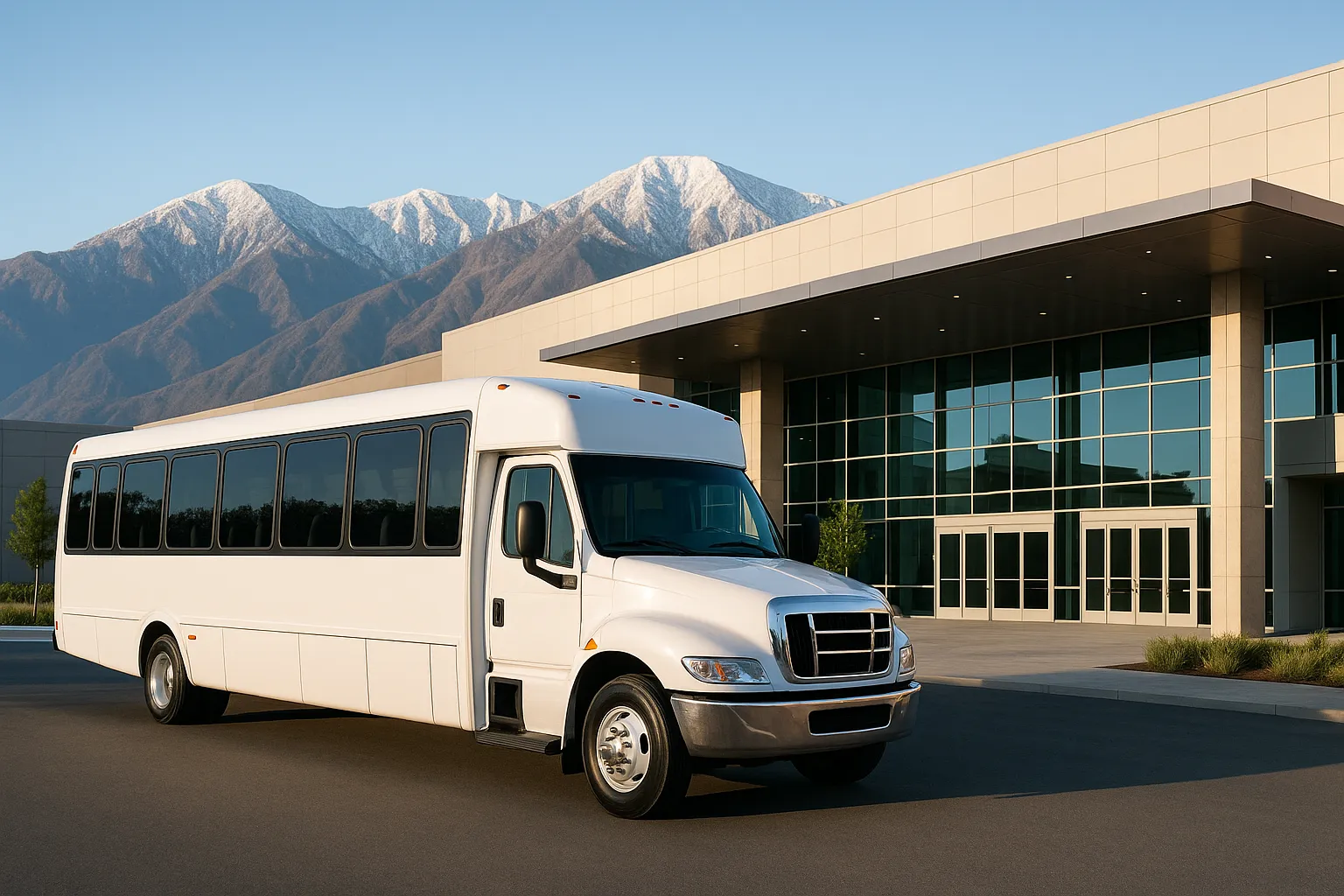
| Minibus (24–35 pax) | $140–$205 | $1,350–$1,900 | 5 hrs |
| Sprinter van (10–14 pax) | $120–$180 | $1,000–$1,500 | 4 hrs |
Typical published ranges. Excludes driver gratuity (10–20%), tolls, parking and airport or venue fees; fuel is included on local trips and peak dates can run 10–20% higher. Your instant quote is one all-in price for your exact trip.
Rates updated September 2026
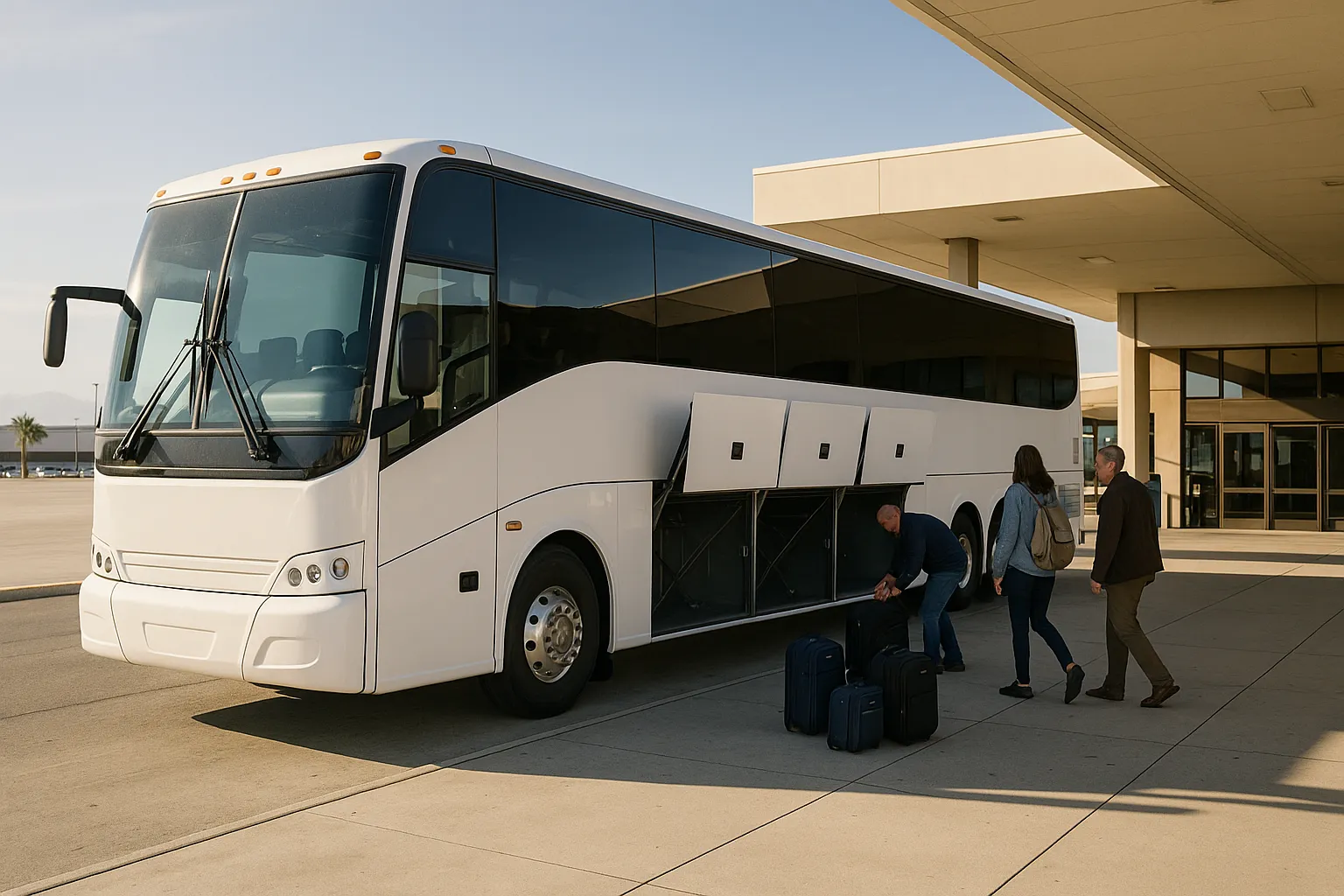
Single lift transfers from the airport to convention hotels, arena events or an Inland Empire campus, with luggage bays doing real work on team and tour arrivals. Flight tracking is applied so a delayed inbound does not strand the group at the curb.
Timed loops between the Ontario Convention Center and the airport area hotels for the length of a show. Headways and vehicle counts are set with show management and flex by day as attendance peaks midweek.
Group nights for concerts and Ontario Reign games, plus the spring run of regional high school and college commencements that fill the arena. The assigned bus entrance depends on the event, so it is confirmed with the venue rather than assumed.
Shift shuttles for the logistics campuses along the 10 and the 15, usually loading at a designated employee lot rather than a truck gate. Schedules are built around shift start times, which do not move for traffic.
Overnight and multi day trips east on the 15 through the Cajon Pass or out the 10 to the desert. These book as day rates per travel day, with weekend direction on the 15 built into the departure time.
Field trips, youth athletics and congregation travel from across the western Inland Empire. Student trips require California SPAB certified vehicles and drivers, so flag the school activity at booking and only SPAB qualified operators are matched.
🚏 Regular runs to Ontario International Airport, Toyota Arena, Ontario Convention Center, Ontario Mills, Museum of History and Art Ontario, Graber Olive House, Ontario Town Square, Ontario Airport Hotel and Conference Center, Chaffey College in Rancho Cucamonga and Victoria Gardens in Rancho Cucamonga.
Ontario International Airport routes commercial vehicles to designated ground transportation areas and sets its own permit and staging rules, which are not the same as the general arrivals curb. Confirm the current charter pickup location and any operator permit expectations with the airport before the trip, and give the driver the terminal and flight so the meeting point is right.
Toyota Arena assigns a bus entrance and a staging area per event, and a concert load out, a hockey night and a graduation do not use the same plan. Ask the venue or the event organizer which gate applies, where the vehicle may stand and when it must clear, particularly on graduation days when several ceremonies run back to back.
Bus loading at the Ontario Convention Center is set per event by the venue depending on which halls are in use and what is happening at the arena nearby. Confirm the assigned door and the marshalling plan with event services when you contract the space, then build the shuttle headways around that point rather than the main entrance.
Ontario Mills has large surface lots with room for a coach, but staging still needs mall security approval and the workable area tightens through the holiday season. The distribution campuses are the opposite problem: they are designed around truck courts, so a passenger vehicle is routed to a specific employee lot or gate arranged in advance with site security.
📅 Peak dates here: Ontario Reign hockey season at Toyota Arena from fall into spring, Concerts and touring shows at Toyota Arena through the year, Trade and consumer show season at the Ontario Convention Center, Inland Empire high school and college commencement ceremonies at Toyota Arena in late spring, Holiday shopping peak at Ontario Mills from Black Friday into January and Peak travel periods at Ontario International Airport around Thanksgiving and the winter holidays — book those 3–6 months out.


Vetted local operators in every market below — pick yours for local rates, vehicle options and trip ideas.
The airport directs commercial ground transportation to assigned areas rather than the general arrivals curb, and permitting and staging rules are set by the airport authority. Confirm the current charter pickup point and any operator permit expectations with airport ground transportation before the trip, and give the driver the terminal and airline so the meeting point matches the arrival.
For anything staying in the Inland Empire, usually yes. The terminals are compact, the curb is close and the drive from the airport to most Ontario and Rancho Cucamonga addresses is short. LAX offers more flights and more international service, but it adds a long ground leg in each direction plus curb rules that change, so compare the total door to door time.
The arena sets a bus entrance and staging area per event, and it is not always the same gate for a concert, a hockey night and a graduation. Ask the venue or the event organizer which gate your coach should use, where it may stand during the event and what time it must clear, then pass that to the operator ahead of the date.
Usually only to a designated passenger area. The distribution sites along the 10 and the 15 are built around truck courts and trailer yards, and site security typically routes buses to an employee lot or a specific gate with an advance vehicle and driver list. Set that point with the site before the first run instead of at the shift change.
Plan on roughly four hours of driving in clear conditions and meaningfully more on peak weekends, since the 15 through the Cajon Pass and across the desert backs up outbound on Friday and inbound on Sunday. Multi day trips price as a day rate per travel day, and the driver's hours are planned around the real schedule, not the best case one.
Yes. In California, buses carrying students to school sponsored activities must be SPAB certified with drivers holding the matching certification. Note the student trip when you book so the match is limited to operators with SPAB qualified equipment and drivers, and confirm any district specific requirements with your school office.
One clear price from a vetted local operator — in seconds, no obligation.