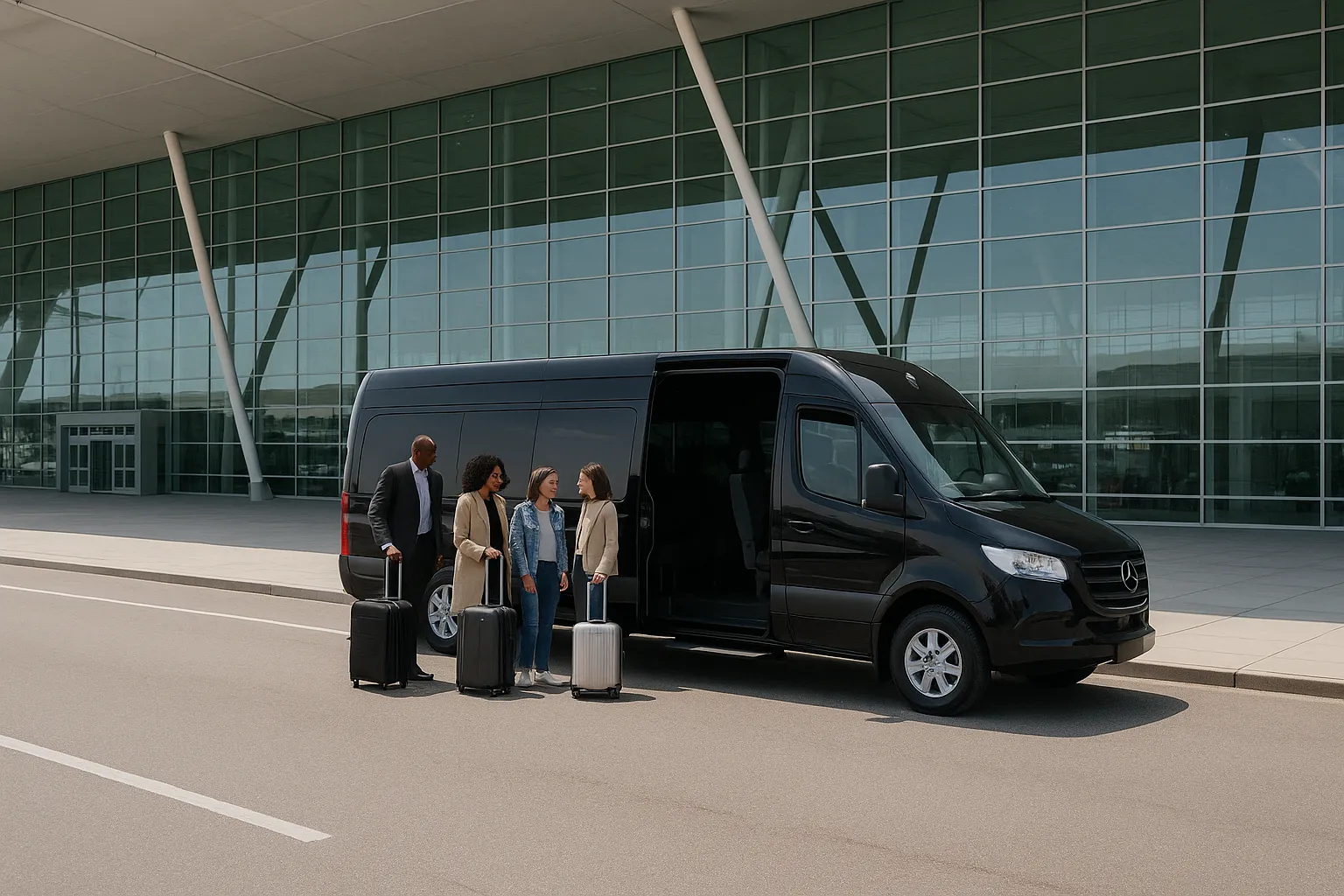
Dulles is the capital region's long-haul gateway, so the groups arriving here tend to be large and international: tour parties, delegations, university cohorts and sports teams. Charter motorcoaches and minibuses run from the terminal to downtown Washington, the Dulles technology corridor and Virginia wine country on an instant all-in price.
Dulles handles the arrivals that fill a whole coach. Inbound tour operators, foreign delegations, exchange and university cohorts, conference groups for downtown shows and athletic teams all come through here because this is where the region's long-haul flights land. A second, very different stream is business travel into the technology and government contracting corridor that stretches from Tysons out through Reston, Herndon and Ashburn. The airport sits well outside the city, so unlike a close-in field, the transfer itself is a substantial drive and is nearly always chartered rather than improvised.
Group pickups here benefit from more room than a close-in airport offers, but the geography is the catch. Buses use designated commercial vehicle and bus positions at the terminal rather than the general arrivals frontage, and operators stage nearby while a flight runs late. International arrivals clear federal inspection before reaching the meeting point, so a greeter waiting in the arrivals hall is the norm for large parties. Access roads serving the airport carry their own rules about which vehicles may use them; the operator plans the routing, and airport ground transportation is the authority on current bus positions.
The airport centers on the Main Terminal with airline gates spread across Concourses A, B, C and D. An underground train carries passengers between the Main Terminal and the concourses, while some gates are still reached by the airport's mobile lounges, which is a genuine quirk worth explaining to a first-time group. International arrivals are processed before passengers reach the public side of the Main Terminal, and after a full long-haul bank that wait is the largest variable in any schedule. Metro's extended line reaches the airport, which helps individuals traveling apart from the group.
Because a Dulles transfer is a real drive rather than a hop, getting the vehicle and the timing right is worth more here. Umbrella Charter Network prices the run all-in and instantly, including multi-day holds, and assigns a vetted local operator that knows the terminal positions and the corridor traffic. The pickup time tracks the actual flight rather than the filed schedule, which matters after a long-haul delay. Agreements are e-signed, the vehicle can be followed live on the day, and ADA lifts are requested at booking rather than arranged at the curb.
Terminals:
Coaches load from the terminal's designated bus and commercial vehicle positions rather than the general arrivals curb. The airport has more room than a close-in field, but positions and any access requirements still change; confirm with airport ground transportation before the travel date.
After a long-haul arrival, the gap between landing and the group reaching the public side can be long. The operator holds in a staging or cell phone area and moves to the terminal on the group leader's call, so the coach is not occupying a loading position while immigration runs.
The roads serving the airport include a restricted access route intended for airport traffic, and a parallel toll road for general use. The operator plans which applies to a chartered movement and builds tolls into the all-in price, but confirm anything unusual with the airport if your itinerary is out of the ordinary.
Downtown Washington is a genuine drive from Dulles, and the corridor congests heavily in both peaks. Return airport runs should be scheduled against the commute rather than the distance, and the operator will normally recommend an earlier departure than a map suggests.
| Vehicle | Hourly | Daily | Min hours |
|---|---|---|---|
| Motorcoach (47–56 pax) | $160–$250 | $1,550–$2,400 | 5 hrs |
| Minibus (24–35 pax) | $130–$190 | $1,250–$1,850 | 5 hrs |
| Sprinter van (10–14 pax) | $115–$175 | $1,050–$1,600 | 4 hrs |
Typical published ranges. Excludes driver gratuity (10–20%), tolls, parking and airport or venue fees; fuel is included on local trips and peak dates can run 10–20% higher. Your instant quote is one all-in price for your exact trip.
Rates updated September 2026
A long-haul party clears federal inspection, meets a greeter in the arrivals hall and boards one motorcoach for the run into the city. Full luggage bays matter here, because these groups arrive with checked bags for a long stay.
Visiting teams land and move between campuses and hotels across Tysons, Reston, Herndon and Ashburn. A minibus held for several days covers site visits without rebooking transport every morning.
Receptive operators bring repeat arrivals into Dulles for a multi-day Washington and Virginia itinerary, keeping one coach and driver for the full segment rather than releasing the vehicle after the airport leg.
Guests flying in for a Loudoun County vineyard wedding are consolidated into shuttles from the terminal and then looped between the hotel block and the venue. Rural venue access is confirmed with the operator before the date.
Exchange students and academic groups arrive together and transfer to campuses in Fairfax, Charlottesville or the District. The longer runs suit a motorcoach with proper luggage capacity and onboard comfort.
Athletic teams landing for a regional competition take a coach that can carry gear below deck and stays with the squad through the venue schedule. Equipment volume, not headcount, usually sets the vehicle class.
🚏 Frequent destinations: Downtown Washington hotels and the National Mall, Walter E. Washington Convention Center, Tysons corporate campuses and hotels, Reston Town Center, The Dulles technology corridor in Herndon and Ashburn, Loudoun County wineries and Leesburg, George Mason University, Fairfax, Charlottesville and the University of Virginia, Shenandoah National Park and Skyline Drive and Dulles Expo Center, Chantilly.
📅 Busiest periods: Summer inbound international tour season from June through August, Spring and autumn convention season in downtown Washington, Technology and government contracting conferences in the Dulles corridor, Loudoun County wedding season from late spring through October, University arrival and commencement weekends in August and May and Autumn foliage touring in Shenandoah and the Blue Ridge — book those weeks early.
Buses head out from Washington DC across a coast-to-coast network of vetted local operators — active in 11+ markets.
It is well outside the city and the transfer is a real highway drive, not a short hop. Plan the timing against peak congestion in the corridor rather than the mileage. For a group with a hard start time downtown, the operator will usually recommend leaving earlier than a mapping estimate suggests.
Allow a substantial buffer for federal inspection, baggage claim and assembling a large party, particularly when several long-haul flights arrive in the same bank. The pickup follows the tracked arrival automatically, but the downstream itinerary still needs slack built into it.
For large international parties, a greeter meeting the group in the arrivals hall and walking them out together is the standard arrangement and is worth requesting. Small domestic parties can meet the driver at the bus position directly. Your operator confirms the meeting point the day before travel.
Yes, and most tour and academic programs do. A continuous hold keeps the same driver with the group across the airport transfer, city touring and any day trips. Share the complete itinerary at booking so driving hours, rest and overnight arrangements are planned correctly.
A motorcoach seating 49 to 56 carries a full complement of checked bags in its underfloor bays and is the usual choice for long-haul arrivals. A minibus of 25 to 35 has far less capacity below deck, and a sprinter van up to 14 suits light luggage only. Enter the bag count with the booking.
Lift-equipped vehicles can be requested when you book, across the classes the market supports. Requesting at booking rather than closer to the date lets the operator commit a specific accessible vehicle and plan stop points that a lift can actually be deployed at.
One clear price from a vetted local operator — pickup time follows your flight.