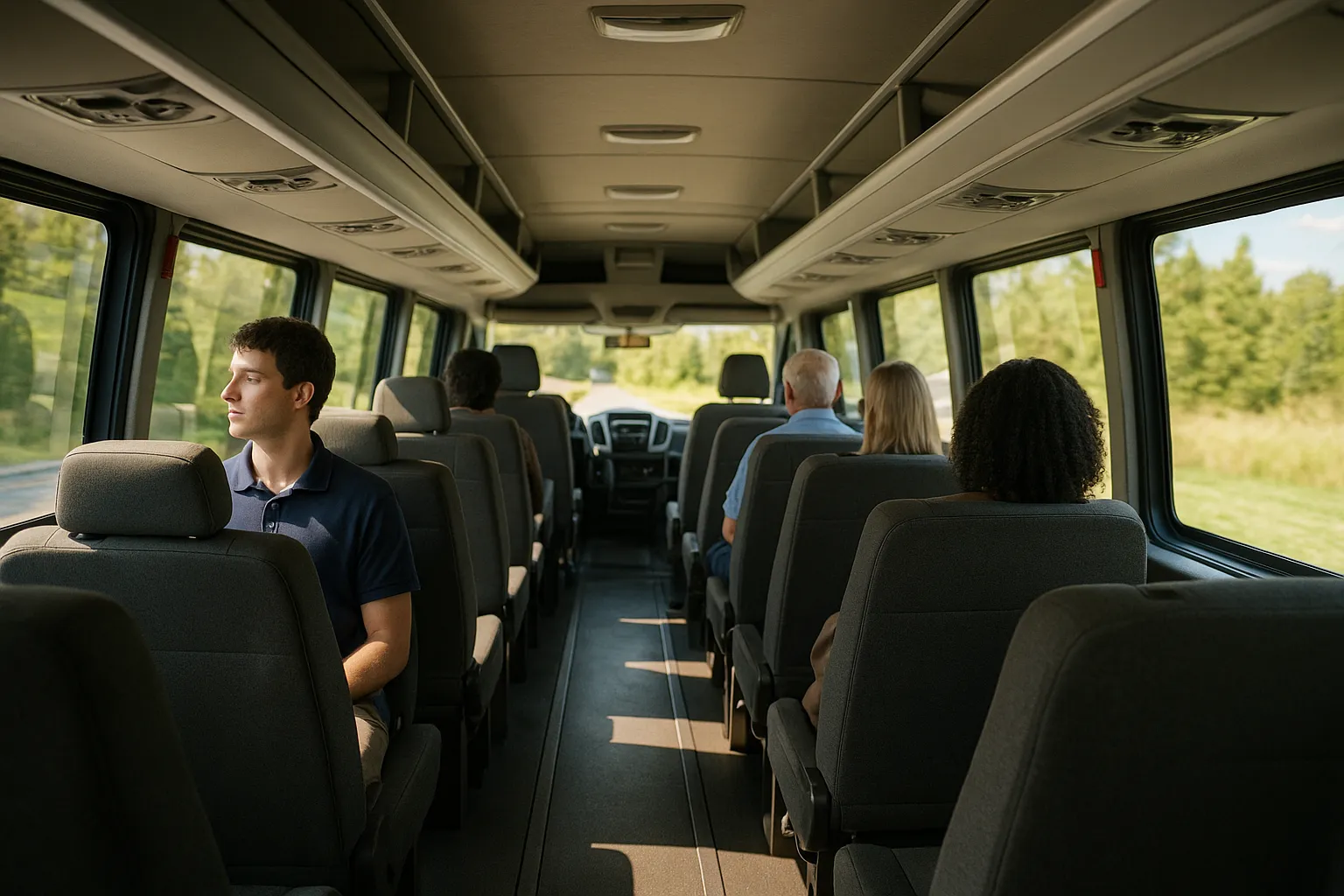
From the Capitol to the Shenandoah Valley tasting rooms, a minibus carries 25 to 35 riders into places a full-size coach cannot park. One professional driver, a rear luggage area, an instant all-in price, and a vetted local operator matched to your date.
Around Sacramento the minibus is the workhorse for legislative and association groups moving between Downtown hotels, the State Capitol and Old Sacramento, for wine tours out to Amador County and the Shenandoah Valley, and for Apple Hill outings in the fall. Farther south, Central Valley bookings lean agricultural and institutional: grower tours near Modesto and Fresno, hospital and university staff shuttles, and youth sports teams running between Stockton, Turlock and Visalia for weekend tournaments.
A minibus in this market seats 25 to 35 in forward-facing rows, measures roughly 30 to 35 feet, and carries luggage in a rear compartment plus overhead bins rather than a deep under-floor bay. Air conditioning is the specification that matters most here and every unit has it. Wi-Fi and power outlets appear on some vehicles, lift-equipped versions are available when requested at booking, and one professional driver runs the entire charter. Most units have no onboard restroom.
The Valley floor is flat and easy, so the vehicle's advantage shows up at the destinations. Foothill winery driveways off Shenandoah Road, Apple Hill ranch lots, Delta levee roads near Locke and Walnut Grove, and older downtown loading zones in Stockton and Fresno all suit a shorter body. Two local realities shape planning: summer afternoons run well past 100 degrees, so shaded staging matters, and winter tule fog on Highway 99 and I-5 slows everything. Chain controls on US-50 and I-80 can also change a Tahoe day.
You book it all on the marketplace. Put in your stops, get one all-in price covering driver time, fuel and the route as built, and e-sign to confirm. The job is matched to a vetted local operator holding California charter-party authority, and live tracking plus a named contact travel with you on the day. For multi-stop wine days, give the operator tasting reservation times up front so the driver can sequence the route rather than improvise between appointments.
25–35
rear compartment for carry-ons, team gear and a few large bags, plus overhead bins
Amador, El Dorado and Lodi wine tours · Capitol, association and state agency group moves · Apple Hill and Delta day trips · SMF airport group transfers · hospital, campus and grower facility shuttles · youth sports travel across the Valley
long climbs to Tahoe or Reno where a restroom and bays are wanted · groups above 35 who want one vehicle · tours where every rider brings a full checked bag
| Minibus (24–35 pax) est. | Hourly | Full day | Minimum | Per mile (long trips) |
|---|---|---|---|---|
| Typical rate | $135–$185 | $1,300–$1,800 | 5 hrs | $7.00 |
Typical published ranges. Excludes driver gratuity (10–20%), tolls, parking and airport or venue fees; fuel is included on local trips and peak dates can run 10–20% higher. Your instant quote is one all-in price for your exact trip.
Rates updated September 2026
Run a group from Downtown Sacramento out through Plymouth to three or four Amador tasting rooms. Many of those driveways and gravel lots were never built for a 45-foot coach, which is why this class dominates the route.
Move delegates between Downtown hotels, the State Capitol and an evening reception in Midtown or Old Sacramento. Short loops on a tight schedule are where a minibus beats a larger vehicle on turnaround.
Take families or staff up Highway 50 to the Camino ranches during harvest weekends. Ranch parking fills fast and is unpaved in places, so a shorter vehicle finds a spot where a coach is turned away.
Collect an arriving team at Sacramento International and deliver them to a hotel in Natomas, Downtown or Davis. One vehicle at the commercial curb beats three vans threading the terminal loop.
Run a delegation through orchards, packing houses or a processing plant between Modesto and Fresno. Farm roads and plant gates are sized for shuttles, and the driver can stage in shade between stops during summer heat.
Loop through Locke, Walnut Grove and the levee roads before dinner along the river. Levee roads are narrow with soft shoulders, so the shorter body is a practical requirement rather than a preference.
A coach is the better vehicle for a Tahoe ski day or a long haul to Los Angeles, where the restroom and under-floor bays earn their keep. For foothill wineries, ranch lots and Delta levee roads, the minibus is often the only charter vehicle that fits.
The Sprinter serves up to 14 and suits a small executive group to the Capitol or SMF. Once you pass the mid-teens, one minibus replaces two vans, two drivers and two sets of parking problems.
Two vans on a wine day means two drivers coordinating tasting appointments and two vehicles squeezing into small lots. A single minibus arrives once and the whole group tastes together.
Buses head out from Sacramento across a coast-to-coast network of vetted local operators — active in 11+ markets.
Yes, and that is the main reason it is booked here. Shenandoah Road and the side roads off it have tight turns and gravel driveways that most full-size coaches cannot use. Send the operator your exact tasting room list so they can confirm approach and turnaround at each stop.
Valley afternoons regularly exceed 100 degrees, so air conditioning runs constantly and shaded staging matters. Tell the operator if the group will be off the vehicle for a long stretch so the driver can plan where to hold the minibus and keep it cool for your return.
Dense fog on Highway 99 and I-5 between roughly November and February can slow travel significantly. Operators build in extra time on early morning runs during fog season, and your driver may route more conservatively. Build slack into airport connections on those dates.
Most do not, and that is standard for this class. On wine and Apple Hill days that is a non-issue because stops are frequent. For a Tahoe or Bay Area run, agree on a comfort stop with the driver before departure.
Usually yes for bat bags, duffels and similar gear in the rear area and overhead bins. Bulky items like full hockey kits or large instrument cases can exceed the space, so give the operator an honest gear list at booking rather than at the curb.
Yes. The network includes vetted operators based throughout the Central Valley, and the match considers where the vehicle starts its day. Naming your true first pickup point, rather than a nearby city, gives you a cleaner price and a shorter deadhead.
One clear price from a vetted local operator — in seconds, no obligation.