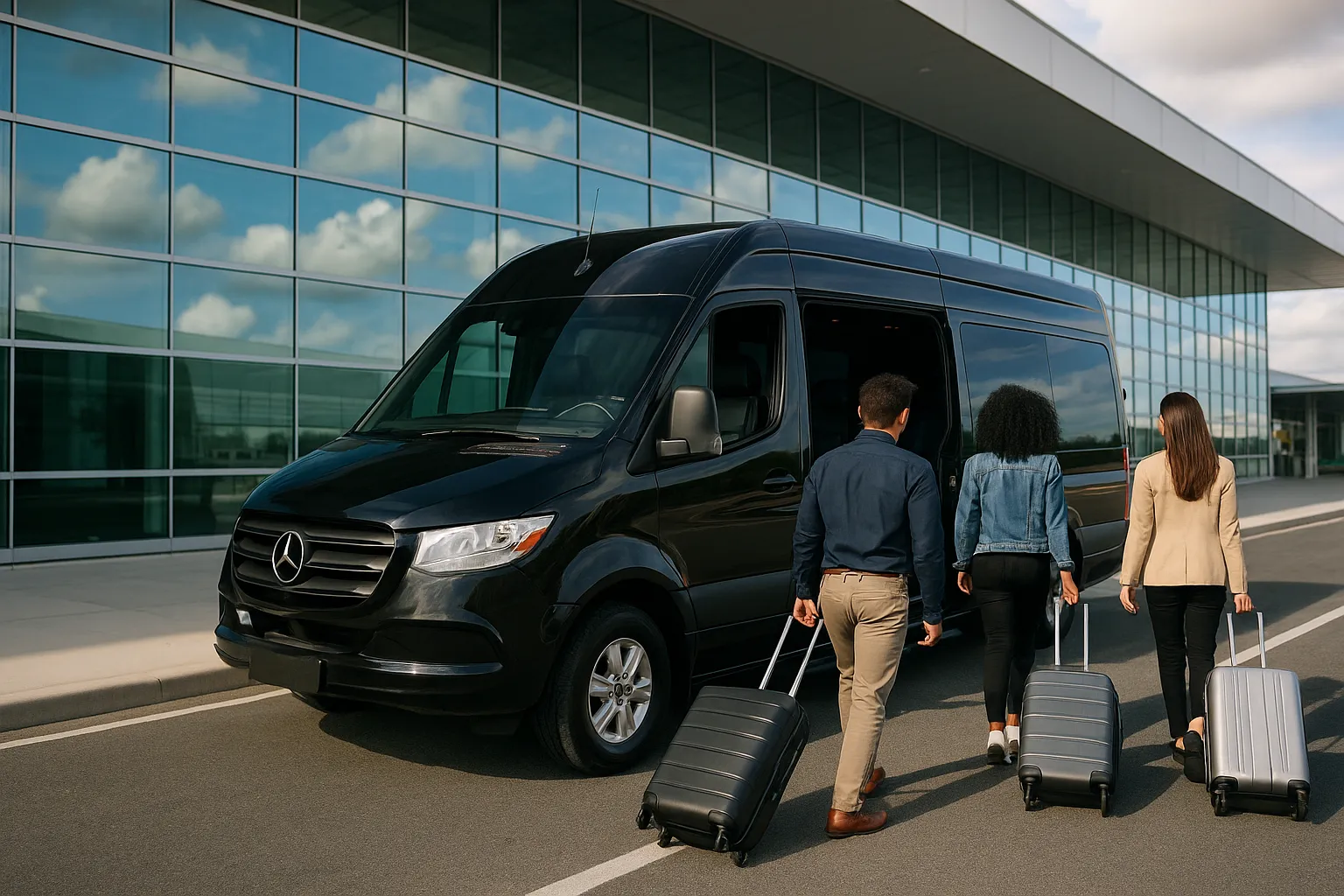
LaGuardia is the short-haul door into New York, and the groups that use it are mostly domestic: corporate teams, association boards, college squads and wedding parties arriving inside a tight window. Charter vans, minibuses and motorcoaches run from the terminals to Manhattan, Queens and Brooklyn on an instant all-in price.
LaGuardia's group traffic looks nothing like a long-haul gateway. Traffic is overwhelmingly domestic and short-haul, so parties tend to land bunched into one or two arrival banks from the same handful of hub cities, carrying carry-ons rather than a mountain of checked bags. Corporate teams in for two days of meetings, association boards, college athletic squads, wedding guests flying in on a Friday evening and incentive groups make up most of what gets chartered here. The upside is speed: the airport sits close to Manhattan, so a well-timed pickup puts a group at their hotel quickly.
Pickups here are built around a compact site. LaGuardia was rebuilt with pedestrian bridges and consolidated arrivals halls, and curb frontage is limited relative to the number of vehicles wanting it, so buses and charter vehicles are directed to their own ground transportation areas instead of mixing with the taxi line. Drivers generally wait off-curb and come in on a call from the group leader, because a coach standing empty at an arrivals curb here will be moved along. Lane assignments do shift; confirm with airport ground transportation shortly before travel.
The airport operates as Terminal A, known as the Marine Air Terminal, plus Terminal B and Terminal C. They are separate buildings with separate roadways, and there is no rail connection to the airport, so every arriving group is a ground movement from the start. A party booked on two different airlines can therefore land in two different terminals a shuttle ride apart, which is worth checking before you assume one pickup point. International arrivals are limited compared with the region's larger gateways, so customs waits rarely drive the schedule.
Pricing on Umbrella Charter Network is instant and all-in, so a planner comparing a single minibus against several cars can see the answer immediately instead of waiting on quotes. Each booking is matched to a vetted local operator that already works the LaGuardia curbs, and the flight number on the reservation drives the pickup time through automatic flight tracking. Paperwork is signed electronically, the day-of vehicle can be followed with live tracking, and lift-equipped vehicles are requested up front so the right equipment is assigned from the start.
Terminals:
Charter vehicles at LaGuardia are directed to bus and commercial ground transportation positions rather than the general arrivals curb. Because the terminals were rebuilt in phases, those positions have moved more than once, so confirm the current one with airport ground transportation before the day.
Curb frontage here is genuinely tight and dwell time is enforced. The practical approach is a phone-call pickup: the group leader confirms everyone is downstairs with bags, and only then does the driver pull in and load in one pass.
For a late flight, the operator holds the vehicle in a cell phone or staging area rather than circling the terminal roadways, which are congested and slow to loop. Ask your operator where they intend to hold so the group leader knows the realistic wait once they call.
There is no train to LaGuardia, so every group movement is a road movement and departure timing has to account for New York traffic in both directions. Building extra time into an outbound airport run is the difference between a relaxed check-in and a sprint.
| Vehicle | Hourly | Daily | Min hours |
|---|---|---|---|
| Motorcoach (47–56 pax) | $195–$325 | $1,900–$3,000 | 5 hrs |
| Minibus (24–35 pax) | $165–$250 | $1,650–$2,250 | 5 hrs |
| Sprinter van (10–14 pax) | $140–$210 | $1,100–$1,800 | 4 hrs |
Typical published ranges. Excludes driver gratuity (10–20%), tolls, parking and airport or venue fees; fuel is included on local trips and peak dates can run 10–20% higher. Your instant quote is one all-in price for your exact trip.
Rates updated September 2026
A team flies in on the same morning bank, meets one minibus and goes straight to a Midtown hotel. The same operator often holds the vehicle for the evening dinner move and the return to the airport.
Board members trickle in across an afternoon on several flights. Planners typically book a sprinter van for each cluster rather than one coach idling for hours, which keeps every arrival moving.
Squads flying in for a game at a Queens, Brooklyn or Bronx venue take a motorcoach that can carry gear bags below deck. The coach usually stays with the team for the venue run and the return flight.
Friday evening arrivals are consolidated into one or two vehicles to a hotel block, then a separate shuttle loop covers the ceremony and reception. Guests who land late are covered by a second, smaller pickup.
A small executive party lands and keeps a sprinter van on standby through a day of meetings across Manhattan, rather than rebooking cars between stops. The vehicle waits where the operator is permitted to stand.
Groups landing at LaGuardia and departing from another regional airport, or vice versa, charter the transfer rather than risk taxis. A single vehicle keeps the party and the bags together across the whole move.
🚏 Frequent destinations: Midtown East and Grand Central hotel cluster, Jacob K. Javits Convention Center, Downtown Brooklyn and Barclays Center, Citi Field and Flushing Meadows, Long Island City and Astoria hotels, Financial District and Lower Manhattan, Columbia University and Upper West Side, Westchester County corporate campuses, Yankee Stadium and the Bronx and Newark and northern New Jersey meeting hotels.
📅 Busiest periods: Corporate meeting season in the spring and autumn shoulder months, Home stands and playoff runs at the Queens and Bronx ballparks, Graduation weekends at New York City universities in May, Late spring and early autumn wedding weekends, Convention weeks that fill Midtown hotel blocks and Thanksgiving and December holiday travel peaks — book those weeks early.
Buses head out from New York across a coast-to-coast network of vetted local operators — active in 11+ markets.

Not always. LaGuardia's terminals are separate buildings with separate roadways, so two airlines can mean two pickup points. Check every flight in the party against its terminal before you commit to one meeting spot, and tell the operator if the group will arrive in two places.
The distance is short by New York standards, but travel time depends almost entirely on the hour. A mid-morning run can be quick while a weekday evening arrival can take far longer. Plan from the clock, not the map, particularly for an outbound trip back to the airport.
It depends on how tightly the arrivals cluster. If the whole party lands within roughly the same window, one motorcoach or minibus is simpler and easier to manage. If arrivals are spread over hours, several sprinter vans usually beat one vehicle sitting on the clock.
A greeter meet inside the arrivals hall can be arranged and is worth it for larger or unfamiliar groups. For a small, experienced party, a curbside meet on a phone call is faster. Either way the driver cannot hold a position at the curb for long, so the call matters.
Booking both directions together is the usual practice, because it locks the operator's availability for a peak departure window and gives you one agreement to sign. Return pickup times are set against the group's departure flight with realistic road time built in.
Sprinter vans carry up to 14, minibuses typically seat 25 to 35, and motorcoaches seat 49 to 56 with full underfloor bays. Because LaGuardia traffic skews to carry-on luggage, groups here often fit a smaller class than they would at a long-haul gateway. ADA lifts are available on request.
One clear price from a vetted local operator — pickup time follows your flight.