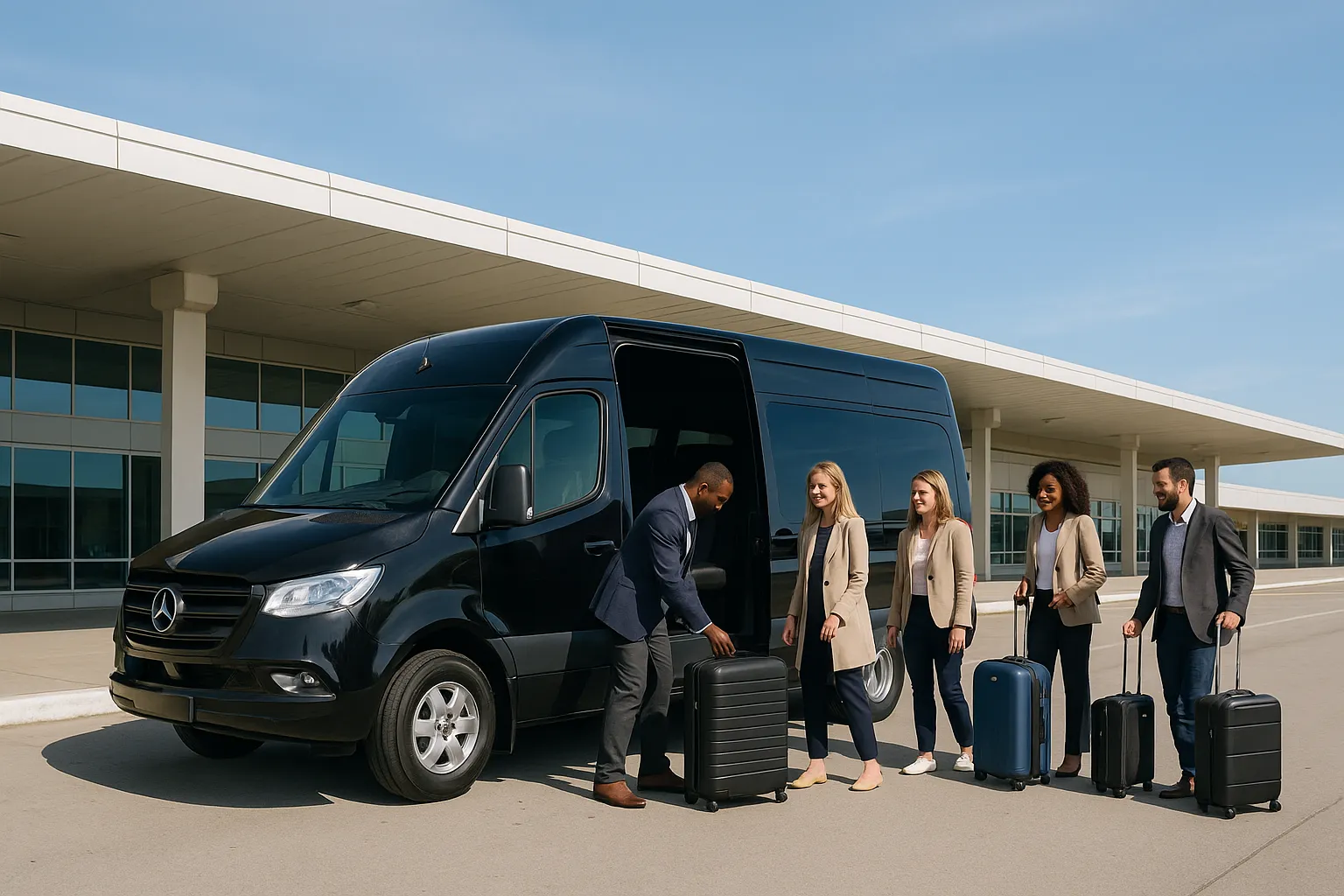
Oakland is the East Bay's practical arrival point, now signed as San Francisco Bay Oakland International. Two compact terminals, a short roadway and quick freeway access make it an easy place to load a group. Teams, school trips, ski groups and corporate travelers charter from here and are moving within minutes of baggage claim.
Groups choose OAK because it is small and fast. Youth and collegiate sports travel heavily through here for tournaments across the East Bay and Central Valley, ski parties connect toward the Sierra in winter, and family, church and reunion groups pick it over the larger gateways for the shorter walk from gate to curb. Corporate travelers land for Oakland and Emeryville offices or cross the bay to San Francisco. Because the airport sits beside the estuary, a group can be at a Jack London Square hotel far sooner than the map distance suggests.
Loading here is genuinely simpler than at a large hub. The terminal roadway is short and mostly at one level, so a driver can reach the right door without circling a multi-deck ring. Charter and commercial vehicles use designated ground transportation areas rather than the general pickup lane, and because the frontage is narrow, drivers wait away from the terminal and come in once the group has bags in hand. Zones do get restriped during construction work, so confirm the current charter loading location with airport ground transportation when you are planning a large multi-vehicle arrival.
There are two terminals, Terminal 1 and Terminal 2, sitting side by side and walkable from one another in a few minutes. Terminal 2 carries the largest single-carrier operation, and Terminal 1 handles the rest along with international arrivals and customs. That short separation is a real advantage for split groups, because passengers landing in different terminals can simply walk together rather than shuttling. Baggage claim sits close to the doors in both buildings, which is why fifteen to twenty-five minutes from wheels-down to boarding a coach is often achievable on a domestic flight.
The marketplace turns that speed into a firm plan. You enter the flights and the destination, see one all-in price immediately, and the trip is assigned to a vetted local operator based in the East Bay that runs these curbs routinely. Flight tracking keeps the pickup tied to the actual landing, which matters for the late evening arrivals that OAK gets a lot of. The charter agreement is e-signed rather than faxed, and on travel day the vehicle is tracked live so a coach on the way to the Coliseum area or Berkeley is never a mystery.
Terminals:
Charter vehicles load in marked commercial areas along the terminal frontage, not the general pickup lane. Ask airport ground transportation to confirm the current spot if you are coordinating several coaches at once.
The frontage is narrow and single-level, so a coach is expected to load and move on. That is why drivers stage off the curb and roll in when the group texts that bags are collected.
For a pre-dawn departure drop, the coach arrives, unloads and clears. If you need a vehicle held on site between two movements, say so at booking so the operator can confirm what the airport allows that day.
| Vehicle | Hourly | Daily | Min hours |
|---|---|---|---|
| Motorcoach (47–56 pax) | $190–$275 | $1,900–$2,750 | 5 hrs |
| Minibus (24–35 pax) | $150–$215 | $1,500–$2,150 | 5 hrs |
| Sprinter van (10–14 pax) | $130–$195 | $1,200–$1,800 | 4 hrs |
Typical published ranges. Excludes driver gratuity (10–20%), tolls, parking and airport or venue fees; fuel is included on local trips and peak dates can run 10–20% higher. Your instant quote is one all-in price for your exact trip.
Rates updated September 2026
Club and college squads land at OAK with gear bags and need one vehicle that holds everything. Motorcoach bays swallow equipment that will not fit in a van convoy.
Ski and snowboard groups connect through Oakland and head east on I-80. Plan the departure early in the day and expect chain-control conditions to change the timing.
Groups arriving at OAK for city hotels cross the Bay Bridge in one move. Afternoon bridge traffic is the variable, so the operator builds realistic run times rather than optimistic ones.
School and counselor groups land in the morning and go straight to campus. A minibus is usually the right call for the narrow streets around the university.
Offsites in Pleasanton, Dublin and Livermore start with an OAK pickup and an I-580 run east. Multi-day bookings can keep the same vehicle and driver on site.
Livermore Valley is close enough for a half-day, while Napa is a full day out of Oakland. Tasting-room access favors a minibus over a full-length motorcoach.
🚏 Frequent destinations: Jack London Square and downtown Oakland hotels, UC Berkeley and downtown Berkeley, Emeryville hotels and offices, Oakland Coliseum complex, Walnut Creek and the Tri-Valley, Livermore Valley wineries, San Francisco Union Square and SoMa, Santa Cruz and the coast, Lake Tahoe and Sierra ski resorts and Napa Valley.
📅 Busiest periods: Sierra ski season transfers from December through March, Spring and summer youth sports tournament weekends, Berkeley commencement and move-in weekends, Fall college football Saturdays in the East Bay, Summer festival and concert season at Bay Area venues and Thanksgiving and December holiday peaks — book those weeks early.
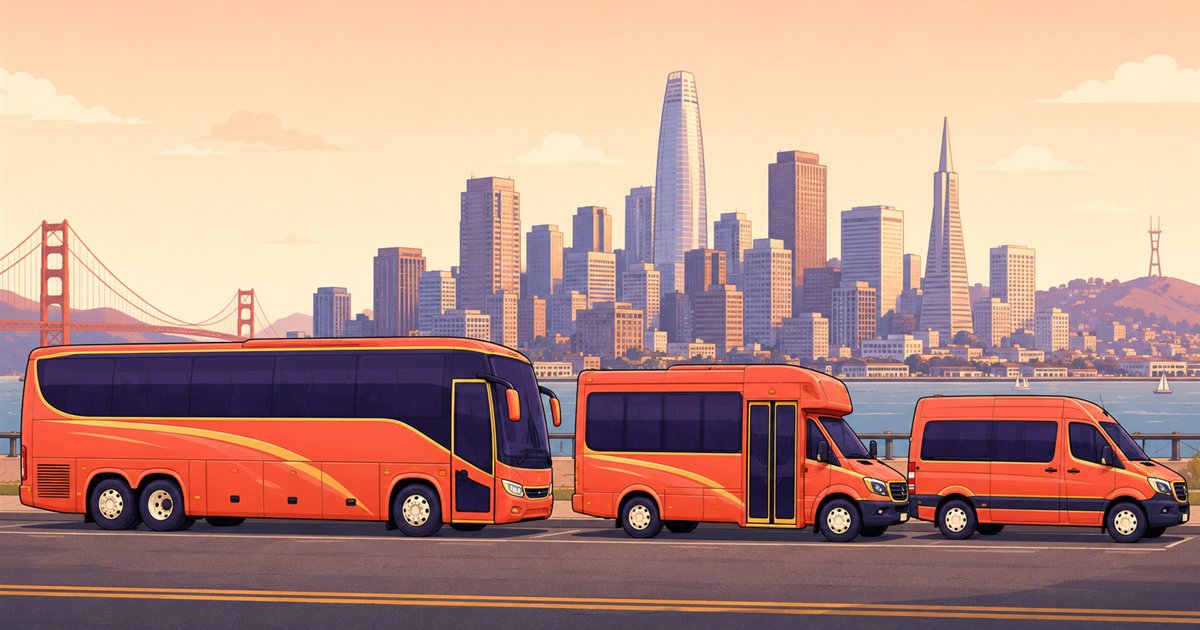
Buses head out from Bay Area across a coast-to-coast network of vetted local operators — active in 11+ markets.
For many itineraries it is the easier option. The terminals are compact, baggage claim is close to the doors and the roadway is short, so a group boards faster. The trade-off is fewer long-haul international options, so check that your flights actually work before committing.
The airport adopted that longer name to describe its location on the bay. The IATA code is still OAK and the terminals are unchanged. Book and check in exactly as you always have, and search for OAK when comparing flights.
Walk together to one terminal. The two buildings are adjacent and the walk takes only a few minutes, which is faster than sending a coach to two separate stops on a narrow roadway. Pick whichever terminal the larger party lands in.
Yes, and it is a common winter booking. Plan for a long day, since the drive is several hours before any weather. Operators watch chain controls on the mountain passes and may adjust departure times, so keep the itinerary flexible in storm weeks.
A motorcoach seating forty-nine to fifty-six has under-floor bays that handle team gear and ski bags. A minibus for twenty-five to thirty-five has less bay space, and a sprinter van for up to fourteen is limited to what fits behind the last row. Give a bag count at booking.
Lift-equipped vehicles are available on request. Because accessible coaches are a limited part of any regional supply, ask when you first quote rather than close to the trip date, and tell us how many wheelchair positions and ambulatory seats you need.
One clear price from a vetted local operator — pickup time follows your flight.