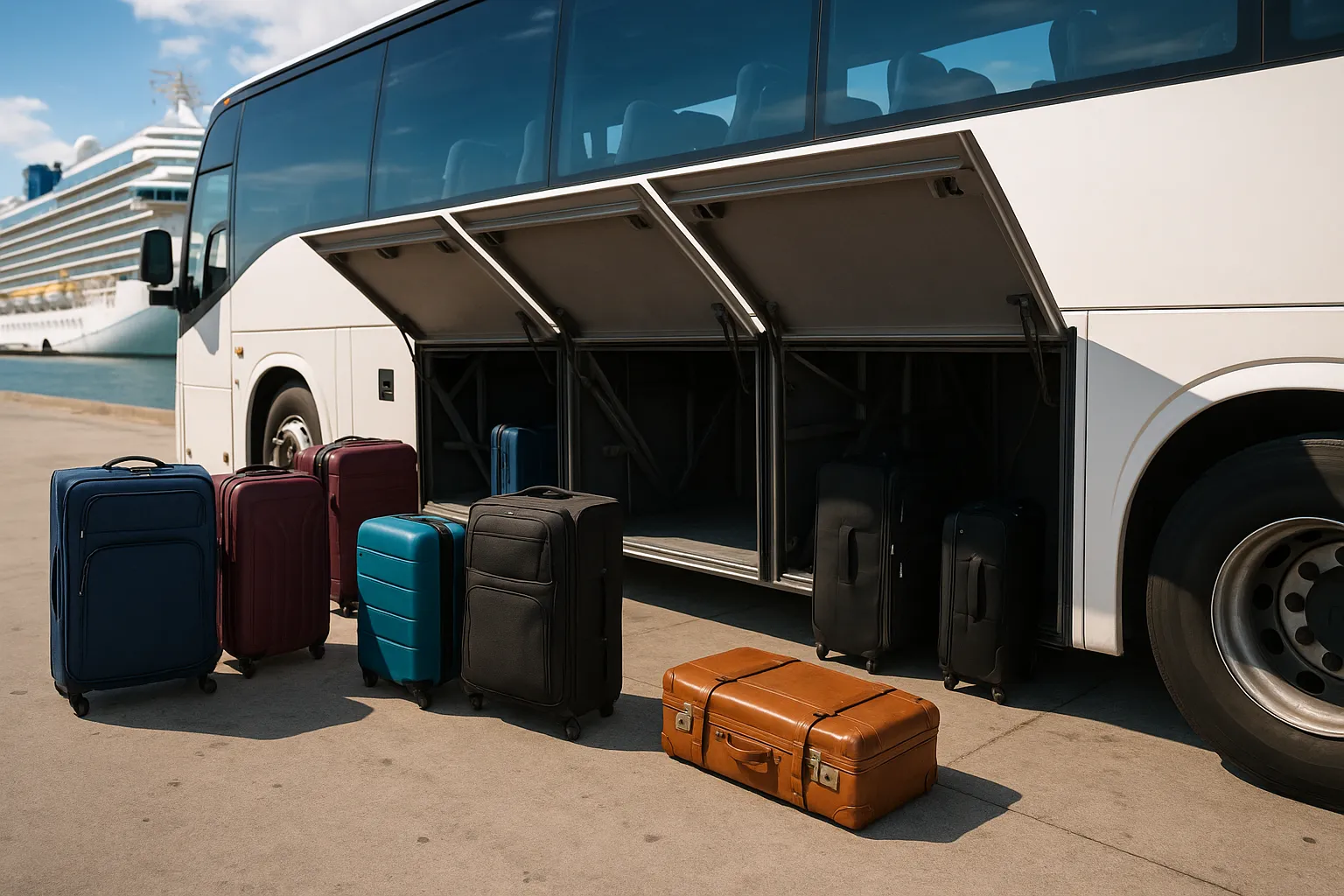
Houston charters 56-passenger coaches for energy sector meetings, medical center conferences, and the long haul down to the Galveston cruise terminals. One coach takes a whole group from Bush Intercontinental to a downtown hotel, out to NRG Stadium, and on to Space Center Houston.
The bookings here reflect Houston's industries. Energy companies in the Energy Corridor and on the west side move training classes, visiting delegations, and plant tour groups. The Texas Medical Center generates conference and symposium traffic that needs hotel shuttles. Cruise groups charter coaches for the run down to Galveston, which is the single most common long transfer in the market. Add convention business at the George R. Brown Convention Center, sports crowds at NRG Stadium and Daikin Park, and Rice and University of Houston team travel.
The vehicle is a full-size motorcoach: 49 to 56 reclining seats, an onboard restroom, air conditioning that has to work hard on the Gulf Coast, a PA, power outlets, and Wi-Fi on most coaches. Under-floor bays carry roughly one large bag per passenger, which is the whole argument for a coach on a cruise transfer where everyone has a full suitcase. One professional driver runs the day within federal hours-of-service limits, and ADA lift-equipped coaches are available on request if you ask when booking.
A coach is about 45 feet long and 12 to 13 feet tall, which suits Houston's freeway geometry and most venue access. Where it does not fit is inside the Loop: Rice Village, Montrose, and the older Heights streets have no room to stage a large vehicle, and garages are out entirely. Beltway 8 tolls are part of most routings. The real planning issues here are weather and water, because heavy rain floods underpasses quickly and hurricane season from June through November can reshape a schedule outright.
Umbrella Charter Network gives you an all-in price as soon as you enter pickup, stops, and times, with the coach and the day already accounted for. The trip goes to a vetted local operator who knows the Galveston terminal staging pattern, the medical center's loading restrictions, and what a Bush Intercontinental to Clear Lake run takes at rush hour. The agreement is e-signed online, and live tracking on the day means your group leader is not calling to ask where the coach is.
49-56
under-floor bays for roughly one large bag per passenger
Galveston cruise terminal transfers with full suitcases · Bush Intercontinental and Hobby group arrivals · Energy Corridor training classes and plant tour groups · Texas Medical Center conference and symposium shuttles · NRG Stadium, Daikin Park, and Toyota Center event groups · Space Center Houston and Kemah day trips
Rice Village, Montrose, and older Heights street staging · Downtown and medical center parking garages · Refinery and plant interiors with their own vehicle restrictions · Small groups of a dozen or fewer where a van is far easier to park
| Motorcoach (47–56 pax) | Hourly | Full day | Minimum | Per mile (long trips) |
|---|---|---|---|---|
| Typical rate | $145–$230 | $1,400–$2,200 | 5 hrs | $8.00 |
Typical published ranges. Excludes driver gratuity (10–20%), tolls, parking and airport or venue fees; fuel is included on local trips and peak dates can run 10–20% higher. Your instant quote is one all-in price for your exact trip.
Rates updated September 2026
This is the market's signature coach run: about an hour and a half south on I-45 with everyone's luggage in the under-floor bays. Terminal staging is controlled on embarkation day, so the operator builds real buffer into the arrival window.
Charters load from the airport's commercial ground transportation area rather than the terminal curb, and a coach clears a full group's checked bags in one pass. Give the operator the flight number so the driver stages to the actual landing.
Companies move visiting classes between west-side campuses and hotels along the Katy Freeway corridor without anyone renting a car. Outlets and Wi-Fi make the ride useful, and one driver covers the full day of moves.
The Texas Medical Center has tight loading restrictions and very little curb, so coaches use designated zones and stage elsewhere between runs. For an attendee group it beats the garage hunt entirely.
NRG has motorcoach lots and defined drop points, and arriving as one group keeps everyone on the same timeline. Exit traffic from the complex is slow after a full house, so set a pickup window rather than a time.
The run southeast to Clear Lake is easy highway miles and both stops can receive a motorcoach. Afternoon storms in summer are common, so keep the return leg flexible.
A 25 to 35-seat minibus works inside the Loop where a coach cannot stage, and it is the better pick for a short dinner run in Montrose or Rice Village. It has no restroom and limited luggage room, which rules it out for Galveston.
A sprinter van seats up to 14 in executive configuration and is right for a small delegation between Hobby and a downtown office. Add cruise luggage or a training class and the van count climbs past the point of being worth it.
Two vehicles on a Galveston transfer means two terminal staging slots on a day when the port is already congested, plus two drivers and two arrival times. One coach is both simpler and easier for the terminal to accommodate.
Buses head out from Houston across a coast-to-coast network of vetted local operators — active in 11+ markets.
Earlier than the drive time suggests. The run is roughly an hour and a half without traffic, but embarkation day brings heavy congestion around the terminals and staging is controlled. Most operators recommend leaving Houston with a wide buffer, and cruise lines set their own arrival windows you should match.
Operators watch Gulf weather closely and will move or cancel rather than run into a storm. During hurricane season, keep a contingency in the plan and make sure your group leader has a line to the operator, because conditions can change within a day.
Only at designated loading zones. The Texas Medical Center has strict traffic and curb rules and no place for a 45-foot vehicle to wait, so the driver loads at an approved point and stages off-site between runs. Publish that meeting point to your attendees.
Yes. Heavy Houston rain floods underpasses and low sections of feeder roads quickly, and drivers will reroute rather than risk standing water. Expect added time on a rainy itinerary and keep your schedule flexible at the margins.
That depends entirely on the site. Many industrial facilities have their own vehicle, escort, and safety requirements and may restrict what can come through the gate. Share the site's requirements when you book so the operator can confirm the coach and driver will meet them.
Cruise season weekends, large downtown conventions, and stadium event dates are the tight windows. Four to eight weeks is comfortable for most Houston dates, and an embarkation Saturday in peak cruise season deserves more lead time than that.
One clear price from a vetted local operator — in seconds, no obligation.