Washington runs on group visits, and the 56-passenger charter bus is what carries them. Student tours, advocacy delegations, association meetings, and reunion groups use one coach to cover a National Mall day, an Arlington National Cemetery visit, and a Capitol Hill morning without anyone driving.
Student travel is the biggest single use here, with school groups arriving all spring for Mall, Smithsonian, and monument itineraries. Advocacy organizations and trade associations bring delegations in for fly-ins and Capitol Hill meetings. Convention business at the Walter E. Washington Convention Center generates hotel shuttles. Universities, military reunion groups, and international tour operators use the same coaches, and many itineraries extend out to Mount Vernon, Annapolis, Gettysburg, and Colonial Williamsburg on multi-day programs.
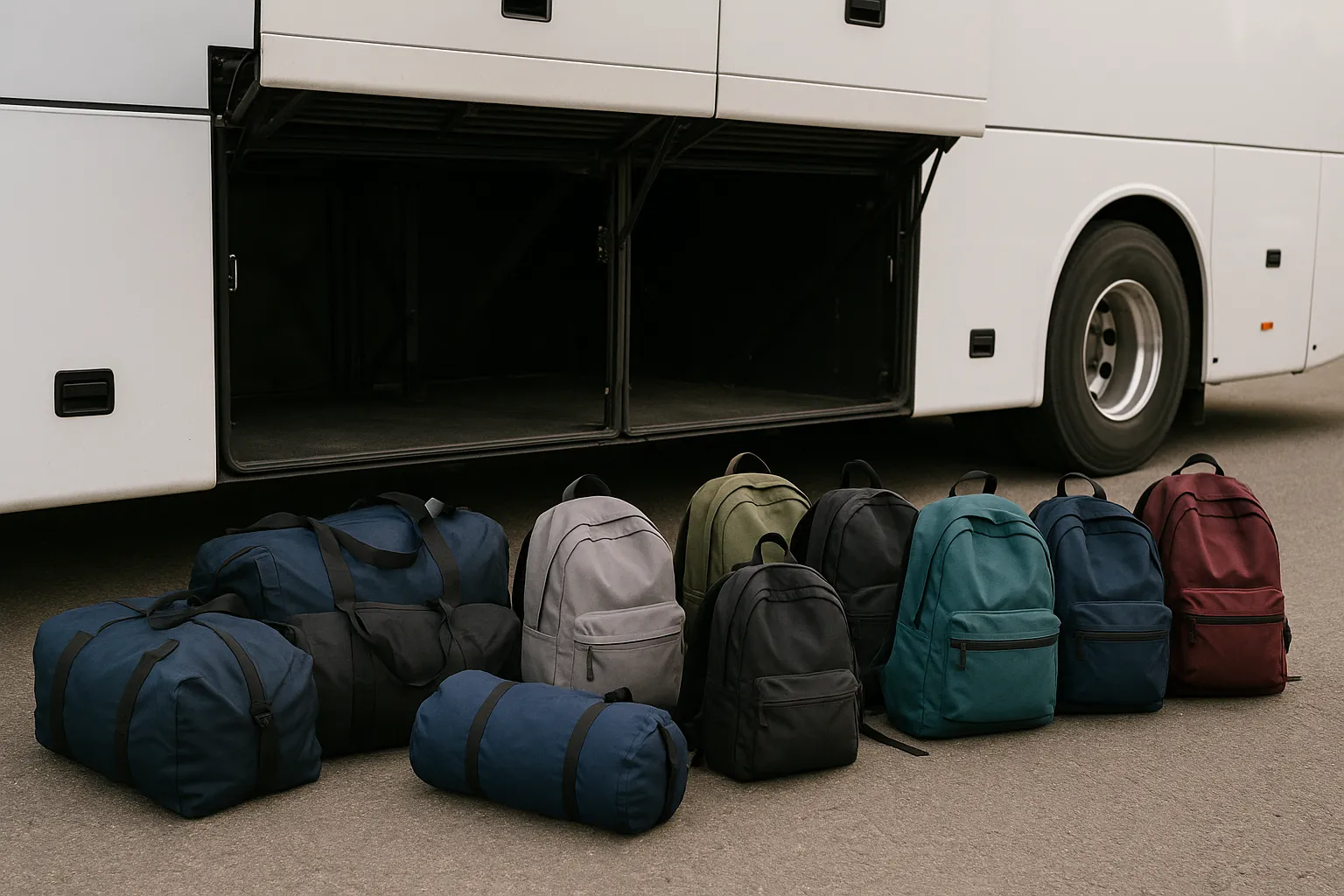
This class is a full-size motorcoach: 49 to 56 reclining seats, an onboard restroom, climate control, a PA that a tour guide uses constantly on a monuments day, power outlets, and Wi-Fi on most coaches in the network. Under-floor bays hold roughly one large bag per passenger, which is what a multi-night student tour needs. One professional driver covers the day within federal hours-of-service limits, which shapes a long day of monuments. Lift-equipped coaches can be assigned when accessibility needs are flagged at booking.
A coach is about 45 feet long and 12 to 13 feet tall, and Washington regulates where it may go and stop. Tour bus parking and loading around the Mall and the monuments is permitted and limited, so drivers use approved zones and stage elsewhere between stops rather than waiting curbside. Rock Creek Parkway and similar park roads exclude commercial vehicles and carry low clearances. Georgetown's streets are too tight, Beltway and 14th Street Bridge traffic is unforgiving, and cherry blossom season fills every approved zone in the city.
Umbrella Charter Network gives you an all-in price on the spot: enter your pickup, stops, and times and the coach and the day are priced without a callback. The trip is assigned to a vetted local operator who understands DC motorcoach parking rules, where a group may legally unload near the Mall, and how a security closure reshapes an itinerary. You e-sign the agreement online, and live tracking on the day tells the group leader exactly where the coach is.
49-56
under-floor bays for roughly one large bag per passenger
Student tours covering the National Mall, Smithsonian museums, and monuments · Capitol Hill fly-ins and advocacy delegations · Convention center and downtown hotel conference shuttles · Reagan National, Dulles, and BWI group arrivals with luggage · Arlington National Cemetery and Mount Vernon visits · Gettysburg, Annapolis, Baltimore, and Williamsburg extensions
Rock Creek Parkway and park roads closed to commercial vehicles · Georgetown's narrow streets and historic residential blocks · Hotel and downtown parking garages · Small delegations of a dozen or fewer moving between offices
| Motorcoach (47–56 pax) | Hourly | Full day | Minimum | Per mile (long trips) |
|---|---|---|---|---|
| Typical rate | $160–$250 | $1,550–$2,400 | 5 hrs | $8.00 |
Typical published ranges. Excludes driver gratuity (10–20%), tolls, parking and airport or venue fees; fuel is included on local trips and peak dates can run 10–20% higher. Your instant quote is one all-in price for your exact trip.
Rates updated September 2026
A coach drops at approved loading zones, stages in permitted motorcoach parking, and returns for each pickup, which is the only workable pattern in the core. The PA carries a guide's narration between stops and the restroom saves a long detour.
Delegations load at a downtown hotel and unload at an approved zone near the Hill, then the coach stages until the afternoon pickup. Security closures can appear with no notice, so the driver may need an alternate loading point on the day.
The cemetery has established motorcoach arrangements and a defined visitor entrance, and a coach keeps a group together for a visit that is often the emotional center of the trip. Allow more time than the map suggests for the walk and the ceremony.
Reagan National is closest, Dulles and BWI are farther but common for charter groups, and all three route charters to designated staging rather than the terminal curb. Under-floor bays take a multi-night tour's luggage in one load.
A straightforward run down the George Washington Memorial Parkway corridor with motorcoach parking at Mount Vernon. Old Town's older streets are tight, so the drop and the staging point are usually different places.
Both are comfortable coach distances and both receive motorcoaches at their visitor facilities. Add your touring time to the drive and the operator will confirm the day fits within the driver's legal hours.
A 25 to 35-seat minibus fits Georgetown and some tighter Capitol Hill blocks where a coach cannot stage, and it is easier to park downtown. It has no restroom and limited luggage space, which is a real loss on a student tour.
A sprinter van seats up to 14 in executive configuration and is the right vehicle for a small association board doing office visits. A school group or a delegation of 40 turns it into a convoy with a coordination problem.
Two vehicles need two permitted loading slots in a city that rations them, two drivers, and two arrival times at a museum entry window. One coach is easier to permit and much easier to keep on a tight monuments schedule.
Buses head out from Washington DC across a coast-to-coast network of vetted local operators — active in 11+ markets.
The District designates tour bus loading zones and motorcoach parking areas, and they are limited and heavily used. The normal pattern is drop at an approved zone, stage in permitted parking, and return for pickup. Your operator handles the permitting side and will tell you the meeting points.
Late March into April is the busiest stretch of the year, with student tours and festival visitors competing for the same approved zones and the same road space around the Tidal Basin. Book far ahead, expect longer walks from drop points, and add time to every leg.
Streets near the Capitol, the White House, and the Mall close on short notice and a coach cannot simply reroute through side streets. Drivers adapt with alternate loading points, so keep your group leader reachable and treat pickup times as windows rather than fixed minutes.
No. Rock Creek Parkway and similar park roads restrict commercial vehicles and carry low clearances, so coach routing uses other arterials. That is one reason a coach's travel time across the city differs from what a car navigation app shows.
Gettysburg is comfortable as a day trip. Williamsburg is long enough that once you add touring time the day presses against federal hours-of-service limits, so it is usually built as an overnight. The operator will confirm which version of your itinerary is legal before you commit.
Spring is effectively booked out well in advance across the region, because every district travels in the same eight weeks. If your trip falls between March and June, reserve as early as your school calendar allows and expect limited flexibility on date changes.
One clear price from a vetted local operator — in seconds, no obligation.